Why Marquise Cut Lab-Grown Diamonds Are Suddenly Everywhere in 2026
If you’ve been scrolling engagement rings lately, you’ve probably noticed something: marquise cut lab-grown diamonds are having a major moment. And it’s not hard to see why.
This elegant, elongated shape offers the best of both worlds: the vintage romance of old-world jewelry and the modern, ethical sourcing of lab-grown diamonds. Plus, that dramatic, finger-flattering silhouette?
Let’s break down everything you need to know before buying one.
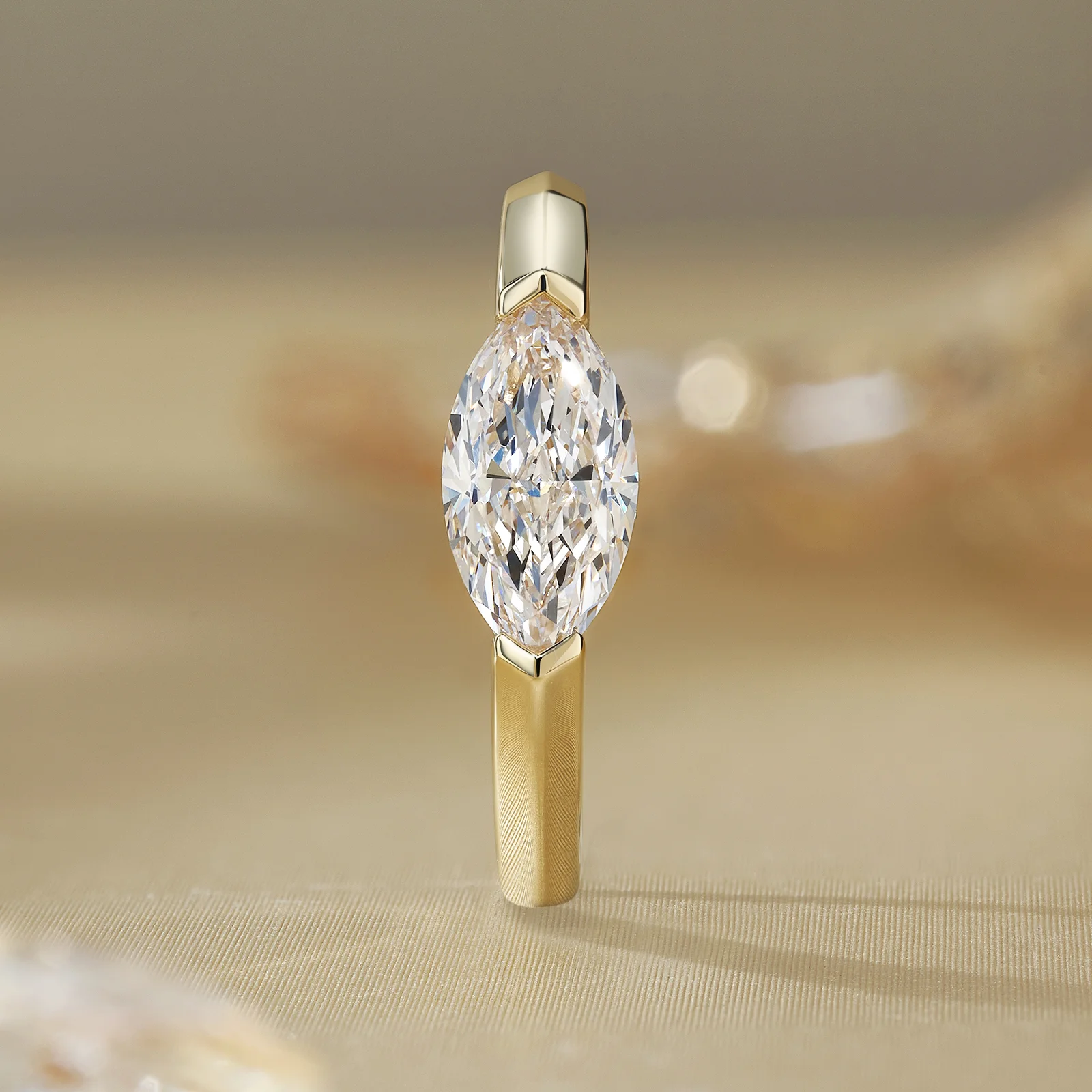
What Exactly Is a Marquise Cut Diamond?
The marquise cut, sometimes called a “navette” (little boat) shape, features an elongated silhouette with pointed ends. It typically has 58 facets, similar to a round brilliant cut, arranged to maximize sparkle.
Here’s what makes it special:
- Looks bigger than other cuts – The elongated shape creates the illusion of a larger diamond
- Flattering for fingers – Makes fingers appear longer and slimmer
- Unique vintage vibe – Popular in the 1970s and now making a strong comeback
- Versatile style – Works beautifully in solitaire, halo, or three-stone settings
Marquise Cut Lab-Grown Diamonds vs. Natural: What’s the Difference?
When you choose a lab-grown marquise diamond, you get the same physical, chemical, and optical properties as a natural diamond – just without the environmental impact and questionable sourcing.
Here’s the comparison:
| Aspect | Lab-Grown | Natural |
|---|---|---|
| Cost | 30-50% less | Premium price |
| Quality | Same 4Cs grading | Same 4Cs grading |
| Ethics | Conflict-free guaranteed | Varies |
| Environment | Minimal impact | Significant mining impact |
And the best part? Even gemologists can’t tell them apart without specialized equipment.
Key Factors to Consider When Buying a Marquise Cut Lab Diamond
Marquise cuts have some unique characteristics that require special attention. Here’s what to look for:
1. Length-to-Width Ratio
This is crucial for a marquise. Aim for a ratio between 1.70 and 2.10:
- 1.70-1.85 – More rounded, classic look
- 1.85-2.10 – More elongated, dramatic look
Too short (under 1.70) and it starts looking like a cushion cut. Too long (over 2.10) and it can appear too skinny.
2. The Bowtie Effect
Marquise cuts are prone to a “bowtie” – a dark area across the center of the diamond. This is normal to some extent, but you want to avoid prominent bowties that ruin the stone’s brilliance.
Look for a well-cut marquise with minimal bowtie effect. This is where seeing the diamond in person or in high-quality video really helps.
3. Clarity Considerations
Marquise cuts can show inclusions more prominently than round cuts, especially near the pointed ends. We recommend:
- VS2 or better for eye-clean appearance
- Check for inclusions near the tips – they’re more likely to cause chipping
- Read our clarity guide for more details
4. Color Grade
Color is more noticeable in marquise cuts, especially if you’re looking at larger stones. For white gold or platinum settings:
- G-H color offers excellent value and faces up white
- D-F color for the purest white look (budget allowing)
In yellow gold settings, you can comfortably go down to I-J color and still get a beautiful result.
Setting Ideas for Your Marquise Cut Lab-Grown Diamond
The marquise’s unique shape opens up some beautiful setting options:
Solitaire Setting
Timeless, elegant, and lets the diamond speak for itself. The classic six-prong setting provides excellent protection for those delicate points.
East-West Setting
Horizontal marquise settings are super trendy in 2026! This modern look shows off the unique shape and sits beautifully on the finger.
Halo Setting
Want even more sparkle? A halo of small diamonds around your marquise makes the center stone look even larger. It’s a popular choice for hidden halo lovers.
Three-Stone Setting
Marquises look stunning with side stones – either smaller marquises, round brilliants, or even pear shapes for a romantic, vintage feel.
Marquise Cut Lab-Grown Diamond Prices in 2026
Let’s talk real numbers. Here’s what you can expect to pay for a marquise cut lab-grown diamond in 2026:
| Carat | Quality (G/VS2, Excellent Cut) | Price Range |
|---|---|---|
| 1.0 ct | Good quality | $2,500 – $4,200 |
| 1.5 ct | Good quality | $4,500 – $6,800 |
| 2.0 ct | Good quality | $7,200 – $11,500 |
| 2.5 ct | Good quality | $10,500 – $15,800 |
Compare that to natural diamonds at 2-3x the price! It’s easy to see why so many smart buyers are choosing lab-grown.
For more price context, check out our 2 carat lab diamond price guide.
Setting Your Marquise: 14K vs 18K Gold
When it comes to setting your marquise diamond, the metal choice matters:
- 14K gold – More durable, better for daily wear, more affordable
- 18K gold – Richer color, purer gold, slightly softer
We recommend 14K for most engagement rings, especially active lifestyles. Read our 14K vs 18K guide for a deeper comparison.
Certification Matters: IGI vs GIA for Marquise Lab Diamonds
Always buy certified! For lab-grown marquise diamonds:
- IGI certification – Most common for lab-grown diamonds, excellent standards
- GIA certification – Also available, more widely recognized for natural diamonds
Both are respected. We recommend going with IGI for better value, or GIA if you prefer the more established name. Our IGI vs GIA comparison explains this in detail.
Final Tips: How to Get the Best Marquise Cut Lab-Grown Diamond
Ready to shop? Keep these tips in mind:
- View the diamond before buying – Photos or videos are essential to check the bowtie
- Consider a slightly larger size – With the savings from lab-grown, you can often go 0.3-0.5ct bigger
- Protect the points – Choose a setting with end prongs to keep those delicate tips safe
- Trust your eyes – Sometimes an H color looks just as good as a D in real life
- Compare multiple stones – Don’t just buy the first one you see
Ready to Find Your Perfect Marquise?
A marquise cut lab-grown diamond offers vintage elegance, ethical sourcing, and incredible value – it’s no wonder they’re one of the most popular shapes in 2026.
Whether you’re drawn to the classic solitaire look or want to try something more modern like an east-west setting, this shape delivers drama and romance in spades.
Have questions? Our experts are here to help you find the perfect marquise cut lab-grown diamond for your style and budget. Get in touch today – we’d love to help!