A cravação nivelada de um diamante cultivado em laboratório - afundando a pedra no nível do metal e polindo uma borda fina de ouro ou platina sobre o cinto - é uma das maneiras mais protetoras e de aparência moderna de montar uma pedra. É também a configuração com maior probabilidade de quebrar o diamante durante o trabalho. O mesmo martelar que prende o metal sobre a cinta envia choque direto na pedra, e um diamante cultivado em laboratório com uma cinta fina ou machucada pode lascar, partir, ou dividir antes mesmo de a configuração ser concluída. Este guia explica como uma fábrica de cenários aborda um diamante cultivado em laboratório de configuração embutida trabalho para que a pedra permaneça intacta, o aro segura, e o anel fica limpo há anos.
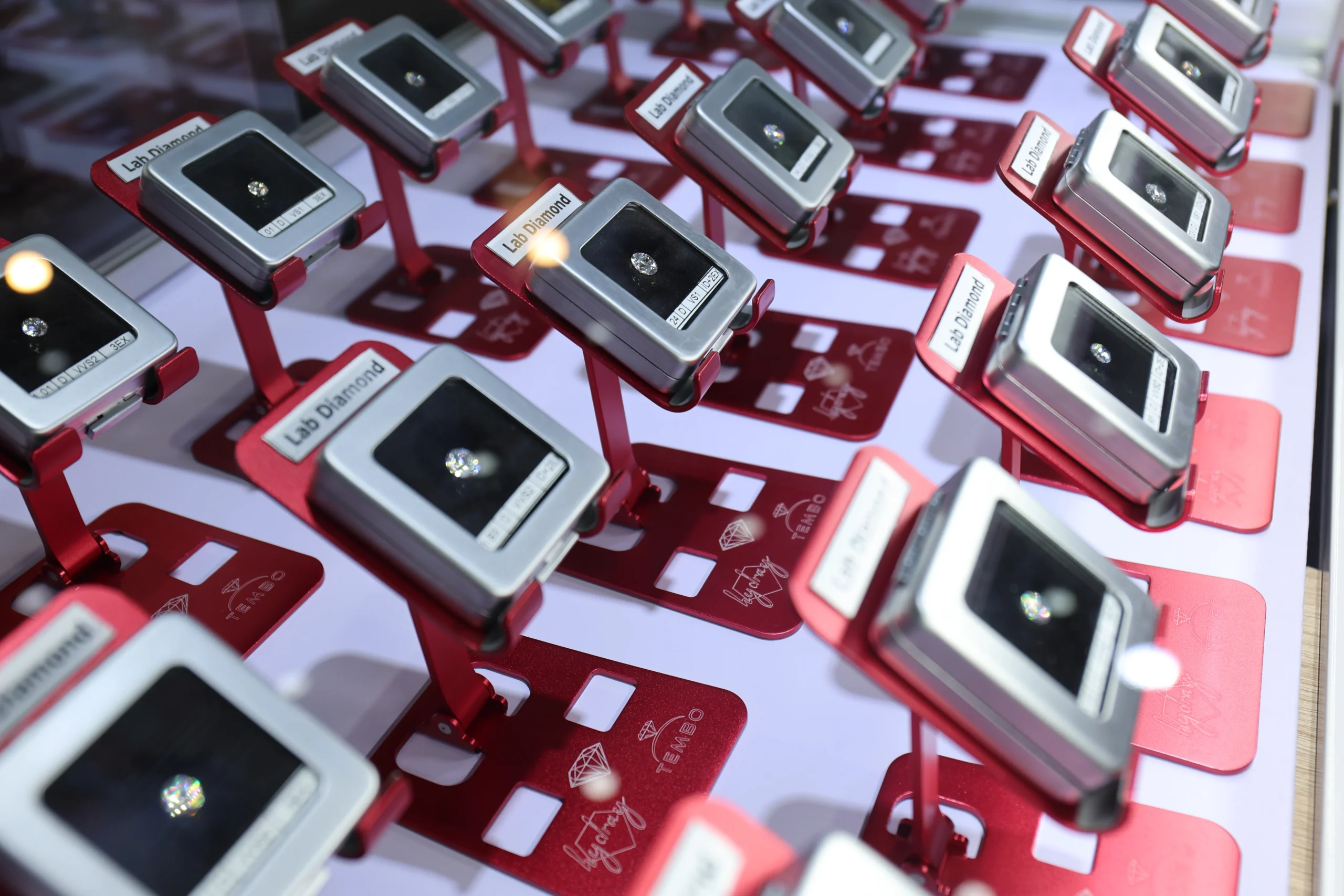
O que é configuração nivelada – e por que a pedra está em risco
Configuração de descarga (também chamado de cenário cigano) assenta um diamante em um recesso perfurado no metal para que a mesa fique nivelada com a superfície, em seguida, empurra uma borda fina de metal sobre o cinto para travar a pedra no lugar. Não há pontas e nenhuma parede de moldura subindo acima da pedra – o próprio metal faz toda a sustentação. O visual é limpo, discreto, e sem problemas, é por isso que as pedras embutidas são populares nas bandas masculinas, anéis de sinete, e empilhando anéis que são derrubados.
A compensação é mecânica. Ao contrário de um configuração de pino ou moldura, onde o metal é principalmente dobrado ou formado frio ao redor da pedra, a configuração de descarga depende do impacto. O levantador usa um punção de aço e um martelo para conduzir o aro de metal para dentro e para baixo sobre a cinta. Cada golpe transmite força diretamente para o diamante. Bem feito, o metal flui como argila e a pedra nunca sente isso. Feito mal, um único golpe errado lasca o cinto ou divide a pedra ao longo de um plano de clivagem - e o dano geralmente é invisível até que a pedra falhe mais tarde, ou aparece como uma pena branca sob ampliação.
Por que os diamantes cultivados em laboratório são adequados para configuração de descarga
Os diamantes cultivados em laboratório são fisicamente idênticos aos diamantes extraídos – mesma dureza, mesmo decote, mesma fragilidade ao longo dos planos cristalinos - então eles não são mais ou menos frágeis em uma configuração nivelada. O que os torna um par inteligente é a economia e a consistência. A configuração nivelada é implacável: se uma pedra rachar durante o endurecimento, é uma perda total, porque a única maneira de removê-lo é perfurando. Um diamante cultivado em laboratório custa uma fração de uma pedra extraída do mesmo grau, então o risco financeiro de uma falha na configuração é muito menor, e uma fábrica pode se dar ao luxo de colocar pedras maiores de forma mais agressiva.
A consistência também é importante. Pedras CVD e HPHT de um fabricante respeitável fabricante de diamantes cultivados em laboratório chegue com espessura de cinta e geometria de corte previsíveis, o que permite que o levantador prepare o assento para tolerâncias exatas em vez de adivinhar a variação natural. A qualidade do corte controlada antes da pedra chegar à bancada — a simetria, condição da cintura, e proporções cobertas em nosso processo de qualidade de corte de fábrica — é o que determina se um trabalho de configuração de descarga será seguro ou arriscado.
Seleção de Pedra: O cinto decide tudo
Se uma configuração de descarga quebrar, o cinto é quase sempre o motivo. O cinto é a borda fina onde a coroa encontra o pavilhão, e é a parte do diamante que absorve a martelada. Uma pedra com uma espessura muito fina, extremamente fino, ou a cinta machucada é uma má candidata para ajuste nivelado - não há material suficiente para o aro de metal agarrar, e a borda irá lascar sob o impacto. Uma pedra com um cinto grosso a ligeiramente grosso é o alvo seguro: borda suficiente para o metal travar, massa suficiente para absorver o polimento sem rachar.
Uma bancada de fábrica classifica as pedras antes que qualquer metal seja tocado. Cada diamante é medido quanto ao diâmetro e verificado sob ampliação quanto à condição do cinturão – lascas, barba (pequenas penas deixadas pela brutalidade), e penas correndo para o cinto desqualificam uma pedra para fixação nivelada ou empurram-na para um estilo de fixação mais suave. Esta é a mesma triagem de cinta e simetria usada para juiz corta nota antes da compra: uma pedra que já tem uma cinta marginal nunca deve passar por um martelo.
A forma também importa. Os brilhantes redondos são as pedras mais fáceis e seguras de encaixar, porque o assento é um cilindro simples e a carga é distribuída uniformemente ao redor da cinta. Formas extravagantes – princesa, baguete, marquise – concentre a tensão nos cantos e pontos, onde um diamante é mais fraco. A colocação nivelada de uma pedra pontiaguda é um trabalho de alto risco que muitas fábricas simplesmente recusam, redirecionando o design para um configuração do canal ou micro almofada onde os cantos são protegidos.
Escolha de metal para um diamante cultivado em laboratório com conjunto embutido
O metal tem que fazer duas coisas contraditórias ao mesmo tempo: ser macio o suficiente para fluir sobre a cinta sob um martelo, e forte o suficiente para segurar a pedra permanentemente. Ouro e platina lidam com isso de maneira diferente.
Platina (Pt950) é o metal mais tolerante para ajuste nivelado porque endurece à medida que é martelado, então a borda que flui sobre a cinta fica mais dura e segura do que onde começou. Não volta, o que significa que uma borda polida permanece no lugar. A desvantagem é que a platina é pegajosa para usinar e o assento leva mais tempo para ser preparado.
14K gold é o ponto ideal prático para anéis de ouro. Possui dureza de liga suficiente para segurar um aro com segurança, e brilha de forma limpa. 18O ouro K é mais macio e dúctil – agradável de trabalhar, mas o aro pode ser um pouco menos seguro a longo prazo, e o maior teor de ouro significa mais expansão térmica. A compensação entre 14K e 18K abordada em nosso guia de comparação de metal aplica-se diretamente aqui: para um anel embutido que será muito desgastado, 14K geralmente é a melhor escolha. A prata geralmente é evitada para ajuste nivelado – ela é muito macia para segurar um aro de maneira confiável e se desgasta com o tempo.
O processo de configuração, Passo a passo
Uma configuração nivelada que não quebre a pedra é o produto da preparação, não forçar. O trabalho do assentador é tornar o assento tão preciso que apenas uma martelada mais leve seja necessária para travar a pedra.
1. Perfure e fure o assento. Um buraco é feito no metal, em seguida, uma rebarba de ajuste amplia a abertura frontal para criar um assento cilíndrico um pouco menor que o diâmetro da pedra - normalmente 0.02 para 0.05 mm subdimensionado, então a pedra é um ajuste leve à pressão. A profundidade é definida para que a mesa fique exatamente nivelada com a superfície, não orgulhoso e não enterrado.
2. Corte o rolamento. Uma rebarba de rolamento corta uma saliência estreita dentro do assento na altura da cintura. Esta saliência é onde o aro de metal se dobrará. Acertar essa altura é fundamental: muito alto e o aro não consegue alcançar a cintura; muito baixo e o aro cobre a coroa e bloqueia o retorno da luz.
3. Assente a pedra. O diamante é pressionado no assento, cinta apoiada na borda do rolamento. O levantador confirma que está nivelado – uma pedra inclinada será carregada de forma desigual quando o aro estiver fechado e tem muito mais probabilidade de rachar.
4. Polir a borda. Usando um punção de aço polido, o levantador empurra o metal para dentro e para baixo sobre a cinta em pequenos, incrementos controlados, trabalhar ao redor da pedra uniformemente, em vez de fechar totalmente um lado. Este é o degrau onde as pedras quebram – a força deve ser leve e distribuída, nunca um único golpe duro.
5. Aperte e finalize. Um segundo, punção mais fina fecha quaisquer lacunas restantes, a superfície é limada e polida nivelada, e a pedra é verificada quanto ao nível e estanqueidade.
Onde as pedras quebram – e como uma fábrica evita isso
Quase todas as pedras rachadas e embutidas remontam a um dos poucos erros. Uma bancada de fábrica tem regras para cada.
Um assento superdimensionado. Se o assento for muito grande, o levantador tem que martelar o aro para alcançar a cinta - e quanto mais metal tiver que se mover, mais força entra na pedra. A correção é um assento cortado com uma tolerância de ajuste por pressão, então o aro só precisa percorrer uma fração de milímetro.
Fechando um lado de cada vez. Martelando uma seção do aro totalmente para baixo, então passando para o próximo, carrega a pedra de forma desigual e pode empurrá-la lateralmente contra a parede oposta. A regra é fechar o aro em pequenos, incrementos alternados ao redor da pedra, do jeito que um ajuste de tensão está equilibrado em torno do cinto.
Um golpe direto na mesa. Um soco que escorregue da borda e atinja a mesa irá lascar ou quebrar a pedra instantaneamente. Os assentadores usam um punção com face não maior que a largura do aro e mantêm a pedra coberta com um dedo ou proteção sempre que possível.
Uma cinta que nunca foi adequada para ajuste nivelado. Nenhuma habilidade salva uma pedra com um cinto extremamente fino ou emplumado. A pedra é rejeitada na triagem – a mesma disciplina que mantém um configuração invisível de falhar mais tarde.
Metal endurecido. Martelar repetidamente o mesmo local torna o metal quebradiço; um golpe final no ouro endurecido pode transmitir um forte choque. Recozimento de setters (suavizar) a área se começar a resistir, então continue com toques leves.
Controle de qualidade depois do martelo
Assim que o aro estiver fechado, a pedra é testada antes do anel sair da bancada. Um teste leve – uma sonda de latão ou plástico encostada na mesa – deve produzir um anel sólido, não é um chocalho. Um teste de pressão com ponta de latão confirma que a pedra não gira ou levanta sob pressão. Sob ampliação, o incubador verifica se nenhuma pena ou lasca se abriu ao longo da cinta durante o polimento, e que o aro cubra a cinta uniformemente em toda a volta, sem nenhuma lacuna onde um pino possa prender.
Esta é a mesma disciplina de inspeção aplicada a brincos ajustados de fábrica e todas as outras montagens: a pedra tem que estar apertada, nível, e sem danos, ou a peça é retrabalhada antes do polimento.
Limites de cuidados e reparos
Um anel embutido é uma das montagens de menor manutenção que você pode possuir - não há pinos para prender, dobrar, ou desgastar, e a pedra fica abaixo da superfície do metal, protegido contra batidas nas bordas. O uso diário é exatamente para o que o ambiente foi criado. A mesma rotina de limpeza e armazenamento em nossos guia de cuidados com diamantes cultivados em laboratório aplica-se: sabonete neutro, água morna, uma escova macia, e armazenamento separado para que o metal não seja arranhado por pedras mais duras.
A principal limitação é o reparo. Porque a pedra é segurada por uma borda polida em vez de pontas, uma pedra solta ou danificada não pode simplesmente ser reapertada – a borda geralmente precisa ser cortada, a pedra redefinida, e o aro polido novamente, que arrisca a pedra novamente. Dimensionar uma pulseira embutida também é mais complicado do que um anel simples: o metal deve se mover sem distorcer os assentos, e qualquer pedra que se solte durante o dimensionamento deve ser redefinida. Uma boa fábrica verificará e redefinirá as pedras como parte de qualquer trabalho de dimensionamento.
Um diamante cultivado em laboratório é ideal para você?
A configuração nivelada é a escolha certa quando você deseja uma limpeza, seguro, visual discreto que pode suportar abusos diários - uma banda masculina, um sinete diário, um anel de empilhamento, ou qualquer peça onde as pontas possam ficar presas. É a escolha errada se você deseja o máximo retorno de luz e brilho, porque a borda de metal bloqueia parte da coroa e a pedra fica abaixo da superfície. Para brilho máximo, uma montagem em pino ou halo é melhor; para máxima proteção e uma aparência moderna e plana, flush é difícil de vencer.
Porque a técnica é implacável, a decisão mais importante é quem coloca a pedra. Uma bancada de fábrica que classifica pedras por condição de cinta, corta o assento para tolerância de ajuste por pressão, e fecha a borda com luz, mesmo passagens podem definir um diamante cultivado em laboratório sem quebrá-lo todas as vezes. Se você está considerando um design de conjunto embutido, entre em contato com nossa equipe com as especificações e o design da sua pedra - diremos diretamente se o seu diamante é um candidato seguro para cravação nivelada e como prepará-lo para a bancada.
Bem feito, um diamante cultivado em laboratório de configuração embutida o anel é a montagem mais protetora que você pode usar – a pedra fica nivelada com o metal, segurado por uma borda polida que não irá prender ou desgastar, e cravejado com martelamento tão controlado que o diamante nunca sofre um golpe prejudicial. A diferença entre uma configuração nivelada que dura a vida toda e outra que racha na bancada está inteiramente na preparação: o cinto certo, o metal certo, um assento ajustado à pressão, e um levantador que fecha o aro uma fração de milímetro de cada vez.