O que torna o diamante cultivado em laboratório Princess Cut uma compra tão inteligente
Se você quer um grande, brilhante, pedra quadrada sem pagar preços redondos e brilhantes, o diamante cultivado em laboratório com corte princesa é o formato que funciona melhor. É o segundo corte de diamante mais popular do mundo, retorna quase tanto brilho quanto uma rodada, e porque desperdiça muito menos cristal bruto durante o corte, custa visivelmente menos por quilate. Adicione preços desenvolvidos em laboratório e você poderá finalmente atingir o peso em quilates que realmente deseja - em vez daquele que seu orçamento forçou você a.
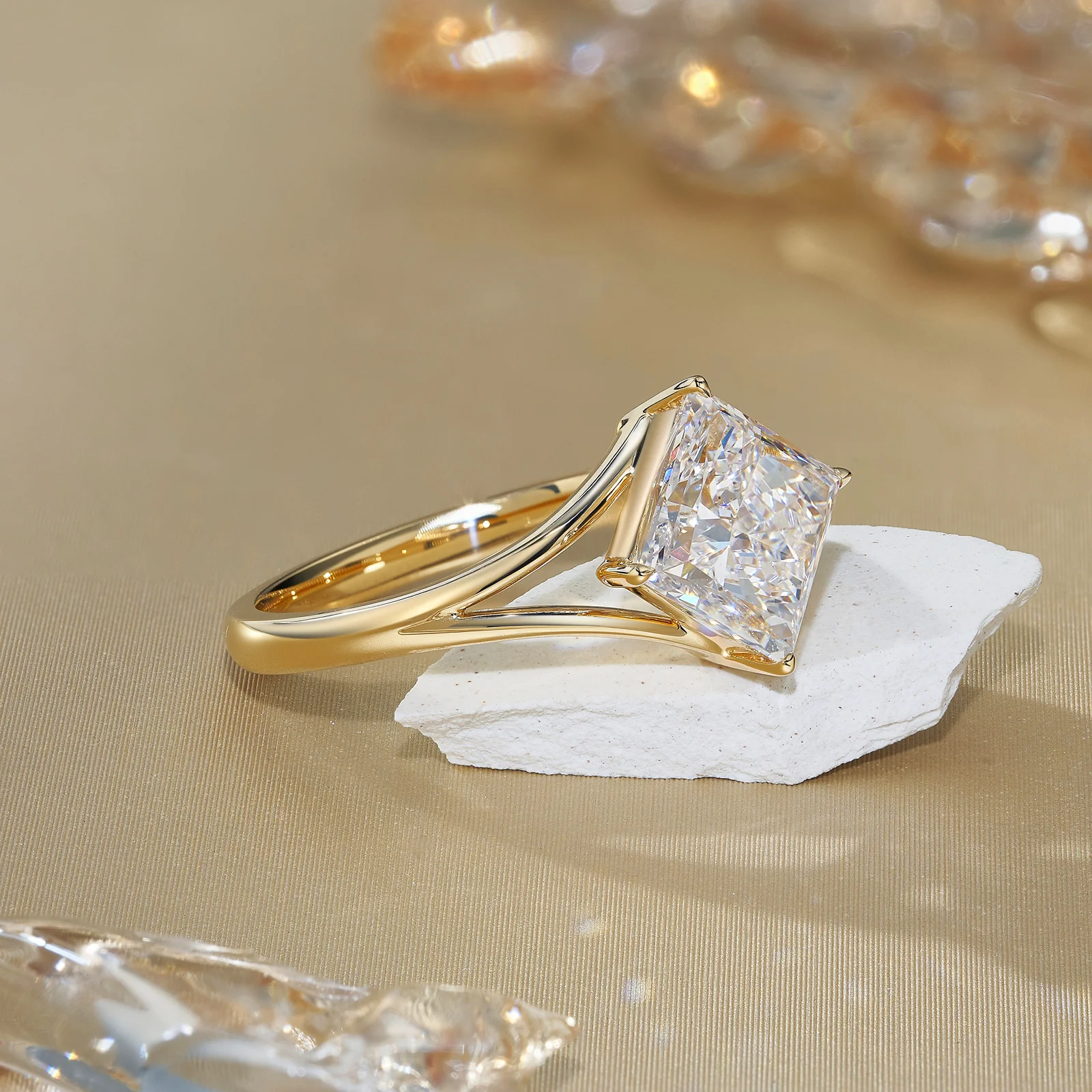
Este guia mostra exatamente como escolher um diamante cultivado em laboratório com corte princesa que parece maior do que custa, permanece brilhante e branco voltado para cima, e - tão importante quanto - não lascará nos cantos um ano depois de comprado.
O que é um diamante cultivado em laboratório com corte de princesa?
O corte princesa é quadrado (ou ligeiramente retangular) corte brilhante, geralmente com 50 para 58 facetas e afiadas, cantos pontiagudos. Ele foi desenvolvido na década de 1980 especificamente para manter mais do cristal bruto original do que um brilhante redondo - o corte redondo desperdiça aproximadamente metade da pedra, enquanto uma princesa retém cerca de 60% disso. Esse único fato é a razão pela qual um diamante cultivado em laboratório com lapidação princesa custa menos por quilate do que uma rodada da mesma qualidade.: simplesmente há menos matéria-prima jogada fora.
Porque é um brilhante corte, com facetas irradiando do centro, uma princesa retorna luz branca e fogo de arco-íris de uma forma que cortes quadrados como o Asscher não fazem. Se você adora a geometria limpa de uma pedra quadrada, mas não quer abrir mão do brilho, a princesa é o corte que dá a vocês dois.
Por que o Princess Cut oferece mais quilates pelo seu dinheiro
Duas coisas tornam um diamante cultivado em laboratório com corte de princesa um valor excepcionalmente bom, e juntos eles são o principal motivo para escolhê-lo em uma rodada.
1. Maior rendimento do bruto. Uma rodada brilhante perde cerca de 50% do cristal bruto durante o corte. Um corte princesa mantém aproximadamente 60% disso. Esse menor desperdício está diretamente incluído no preço - então uma princesa é normalmente 20-30% mais barata por quilate do que uma rodada do mesmo quilate, cor e clareza.
2. Uma área maior voltada para cima. Duas pedras com o mesmo peso em quilates podem ter tamanhos muito diferentes dependendo de como o peso é distribuído. Um corte princesa carrega mais peso em sua superfície superior do que um corte redondo, então é visual maior no dedo pelo mesmo quilate – e maior ainda contra uma rodada do mesmo preço, já que você pode comprar mais quilates para começar.
Se o seu verdadeiro objetivo é “a maior pedra crível para o meu orçamento,” a princesa é uma das formas mais eficientes que você pode escolher. Para uma análise mais completa de onde gastar e onde economizar no tamanho em quilates, veja nosso guia para o melhor tamanho de diamante cultivado em laboratório para o seu orçamento.
Como escolher um diamante cultivado em laboratório com corte princesa
Escolher bem se resume a cinco decisões. Acerte os três primeiros e a pedra ficará excelente; acerte os dois últimos e continuará assim por décadas.
1. Coloque a qualidade do corte em primeiro lugar
Com rodadas, você pode se apoiar em um GIA “Excelente” grau de corte. Os cortes princesa não têm grau universal equivalente, então você tem que julgar se cortar - e isso importa mais aqui do que em qualquer outro lugar, porque uma princesa mal cortada parece escura e sem vida, não importa quão limpa ou branca ela seja.
Procure uma princesa descrita como “Ideal” ou “Muito bom” corte, e verifique as proporções: uma relação comprimento-largura próxima de 1,00–1,05 para um quadrado verdadeiro, uma tabela em torno de 65–75%, e uma profundidade de 68–75%. O sinal mais seguro de uma pedra viva é o brilho uniforme, sem nenhuma cruz escura ou manchas mortas no centro.. Nosso guia para a melhor qualidade de corte para diamantes cultivados em laboratório se aprofunda nas proporções a serem verificadas antes de pagar mais por uma nota que talvez você não precise.
2. Clareza: VS é o ponto ideal
O padrão de facetas brilhantes do corte princesa é excelente para esconder pequenas inclusões, o que significa que você não precisa pagar pela clareza VVS para obter uma pedra com aparência limpa. Um VS2 bem cortado – e às vezes até um SI1 cuidadoso – ficará limpo, porque as facetas espalham a luz de uma forma que mascara as pequenas marcas que uma lupa revelaria.
Este é um dos lugares mais fáceis para economizar dinheiro sem que ninguém perceba. A lógica é a mesma razão pela qual o VS muitas vezes supera o VVS em valor em todas as formas cultivadas em laboratório - explicado na íntegra em nosso artigo sobre quando a clareza do VS tem um valor melhor que o VVS.
3. Cor: Apontar para G – H para o melhor equilíbrio
Cortes quadrados brilhantes podem mostrar um pouco mais de cor nos cantos do que os redondos, portanto, descer muito na escala corre o risco de obter uma tonalidade fraca e quente. Mas você também não precisa perseguir D – F, a menos que esteja combinando a pedra com uma configuração de platina ou ouro branco e queira que ela leia branco gelado..
Para a maioria dos compradores, G ou H é o ponto ideal: eles ficam brancos em ouro amarelo ou rosa e em ouro branco, e custam significativamente menos do que D – F. Se você quiser ver exatamente onde a linha cai, nossa quebra de Cor de diamante cultivada em laboratório DF vs GH mostra como é cada nota na prática.
4. Quilate: Escolha pelo tamanho voltado para cima, Não apenas peso
Porque um corte princesa parece maior do que um corte redondo do mesmo quilate, muitas vezes você pode diminuir o peso e ainda assim obter a presença que imaginou. Uma princesa de 1,5 quilates pode usar uma bala de 1,7 quilates no dedo.
Se você quer um número de manchete, um diamante cultivado em laboratório com lapidação princesa de 2 quilates é um dos tamanhos mais solicitados - grande o suficiente para parecer substancial, ainda muito mais acessível do que uma rodada de 2 quilates. Para contexto de preços do mundo real, veja o que os compradores realmente pagam em nosso 2 guia de preços de anel de diamante cultivado em laboratório de quilates para 2026.
5. Proteja os cantos – escolha a configuração certa
Esta é a parte que muitos compradores perdem, e é aquele que protege o seu investimento. Os cantos afiados do corte princesa são o seu ponto fraco: são a parte mais fina da pedra e a mais exposta, então uma batida forte contra uma superfície dura pode lascá-los.
A solução é a configuração. Uma moldura envolve metal em toda a pedra e é a escolha mais protetora para uma princesa; As pontas em V em cada canto são a alternativa mais leve. Qualquer um deles é muito mais seguro do que quatro pontas simples de canto. As vantagens e desvantagens entre uma luneta protetora e um solitário aberto são apresentadas em nosso comparação entre moldura e paciência. E porque uma configuração protetora significa que o anel ficará muito desgastado por anos, o metal também importa - nosso 14Guia de ouro K vs 18K capas que resistem melhor ao uso diário.
É um corte de princesa ideal para sua mão?
Um brilhante quadrado fica na mão de maneira diferente de um oval alongado ou marquise. Em dedos mais curtos, o contorno quadrado limpo de um corte princesa pode realmente ajudar a mão a parecer mais longa e equilibrada do que uma rodada larga, porque o olho lê as diagonais verticais. Em mãos maiores, uma princesa na faixa de 1,5 a 2 quilates preenche o dedo sem parecer perdida. Se você ainda está decidindo entre formatos para o tamanho da sua mão, nosso guia para o melhor formato de diamante para mãos pequenas compara como cada corte se desgasta.
Quanto você deve pagar por um diamante cultivado em laboratório com corte de princesa?
O fato de a princesa reter mais da produção bruta e cultivada em laboratório fez com que os preços caíssem drasticamente, você está obtendo uma pedra genuinamente grande por uma fração do que o mesmo quilate teria custado para ser extraído, em uma rodada, alguns anos atrás. Como uma moldura áspera: um diamante G / VS2 de lapidação princesa de 1,5 quilates bem lapidado, cultivado em laboratório, geralmente está ao alcance de um orçamento de quatro dígitos, e uma versão de 2 quilates não é mais a compra de luxo que era antes.
O preço que você realmente paga depende do corte, clareza, opções de cor e quilate acima – e ao comprar de uma fonte que lista um certificado real em vez da classificação do próprio vendedor. Sempre verifique o relatório do laboratório antes de confirmar; nosso guia sobre como verificar um certificado de diamante cultivado em laboratório online mostra exatamente como verificar se a pedra corresponde à sua documentação, e IGI vs GIA para diamantes cultivados em laboratório explica qual relatório faz mais sentido para uma compra desenvolvida em laboratório.
Diamante cultivado em laboratório com corte princesa: Perguntas frequentes
Um diamante cultivado em laboratório com lapidação princesa é um diamante verdadeiro?
Sim. Um diamante cultivado em laboratório é fisicamente, quimicamente e opticamente idêntico a um diamante extraído - a mesma estrutura cristalina, a mesma dureza, o mesmo brilho. Um diamante cultivado em laboratório com corte princesa é simplesmente aquele diamante moldado no corte quadrado brilhante descrito acima.
Um corte princesa brilha tanto quanto um redondo??
Quase. O brilhante redondo ainda é o corte que mais devolve luz, mas a princesa é o equivalente quadrado mais próximo e é visivelmente mais brilhante do que cortes quadrados como o Asscher. Para a maioria das pessoas, a diferença no brilho é muito menor que a diferença no preço.
Os cantos irão lascar?
Eles podem, se a pedra estiver colocada em pontas de canto simples e sofrer uma pancada forte. Escolha uma configuração de moldura ou pino em V e lascar não será um problema para o uso diário.
O corte princesa ou almofada é melhor?
Ambos são cortes quadrados populares, mas parecem diferentes: a princesa tem cantos nítidos e um visual mais geométrico, brilho moderno; a almofada tem cantos arredondados e um toque mais macio, brilho vintage. Se você quer nítido e brilhante, escolha princesa; se você quer suave e romântico, escolher almofada.
O resultado final
O diamante cultivado em laboratório com corte princesa é o formato a ser escolhido quando sua prioridade é grande, brilhante, pedra quadrada e você quer que cada dólar apareça no dedo. Escolha uma pedra bem cortada, escolha a clareza VS e a cor G – H, dimensione-o pela área voltada para cima, em vez de apenas pelo quilate, e proteja esses cantos com uma moldura ou configuração de pino em V - e você terá um anel que parece muito mais caro do que era.
Se você quiser ajuda para encontrar um diamante específico cultivado em laboratório com corte princesa de acordo com seu orçamento e especificações, comece com nosso processo de personalização de pedras soltas em joias ou entre em contato com nossa equipe e selecionaremos opções para você.