When buyers weigh prong setting vs bezel lab grown diamond options, the conversation usually starts with look and lifestyle — but on the factory floor the questions are different. A setter has to decide whether a stone will stay secure for decades, how much light will reach the pavilion, and whether the ring can ever be repaired without risking the diamond. Here is how a lab-grown diamond setting factory actually reasons through that choice.
Why the Setting Matters More for a Lab-Grown Stone
A lab-grown diamond is optically and physically a diamond — same hardness, same brilliance, same brittleness along the grain. What changes at the factory is the economics. Because lab-grown stones cost less per carat, buyers routinely push for a bigger center stone than they would with mined, and bigger stones tend to come with thinner girdles and longer, more fragile corners on fancy shapes. The setting is what stands between that investment and a chipped edge or a lost stone. Before any metal is bent, the factory checks the cut and symmetry of the stone itself — how a lab-grown diamond setting factory controls cut quality before a stone reaches the bench — because a poorly set-up stone will fail no matter how good the setting is.
Prong Setting: What the Bench Actually Sees
A prong setting uses small metal claws — usually four or six — to grip the stone at the girdle, leaving the crown and pavilion almost fully exposed. That exposure is the whole point: light enters from every angle, bounces off the pavilion facets, and returns as fire. For brilliance per dollar, prongs are hard to beat, which is why they remain the default for solitaires. The same logic applies to smaller pieces where hold and sparkle both matter — the way a factory tunes prong work on lab-grown diamond stud earrings shows how much precision goes into even a four-prong basket.
The tradeoff is mechanical. Prongs sit above the girdle, so they snag on fabric and knock against doorframes. Over years, a prong wears thin, lifts, or simply fatigues. A single worn prong turns a secure ring into one that can shed its stone on a hard knock — and the wearer usually cannot tell until the stone is gone. This is why every factory setter checks prong height and contact area, not just appearance.
Bezel Setting: What the Bench Actually Sees
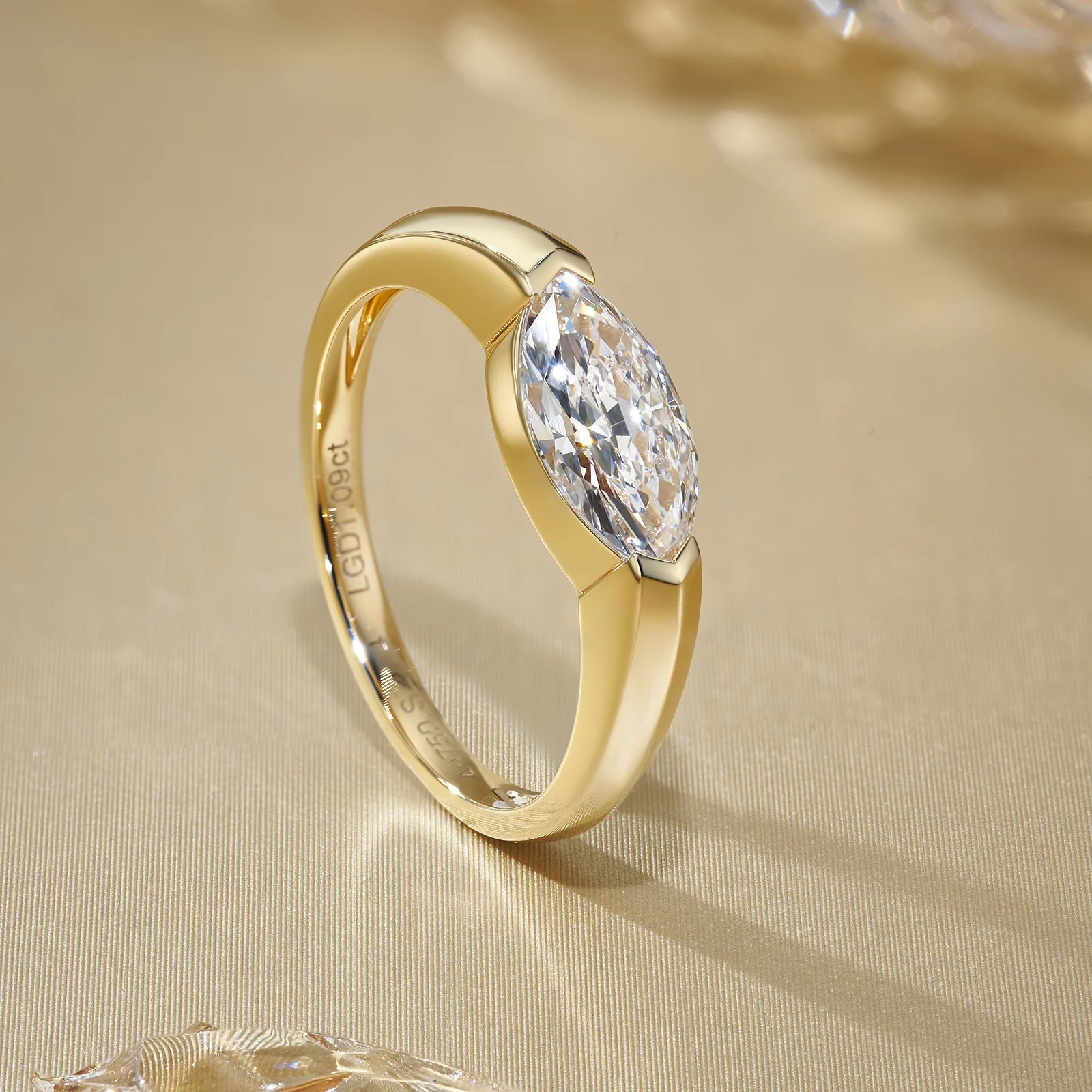
A bezel setting folds a continuous collar of metal over the girdle all the way around the stone. The collar is the security: it grips the stone along its entire edge and physically shields the girdle from chips. For a wearer who lifts weights, works with their hands, or simply does not want to think about their ring, a bezel is the most forgiving option. It is also the setting we reach for when a buyer loves the idea of a bezel vs solitaire engagement ring look and wants the peace of mind to match.
The tradeoff is light. That metal collar covers the girdle and the outermost crown facets, so edge light that would have returned as sparkle is absorbed by the rim. The stone still flashes — the pavilion does most of the work — but it reads slightly smaller and a touch less fiery than the same stone in prongs. On the upside, the rim can make a lower-clarity edge look cleaner, which is a real lever when you are optimizing budget.
Security: Which Actually Holds the Stone Better
On pure retention, the bezel wins. A continuous metal band cannot pop off the way a single prong can lift, and it distributes any impact around the whole stone rather than concentrating it at four or six points. Where the prong setting fights back is inspectability: a prong is visible, so a jeweler can see that a claw is bent or worn and fix it before it fails. A bezel hides the girdle, so a stone that has loosened inside the collar may not be obvious until the ring is x-rayed or the stone is reset.
From the factory side, security is really a question of metal and tolerance. A bezel needs enough metal thickness to be rigid without burying the stone; a prong needs the right alloy so the claw holds tension over years without work-hardening brittle. The choice of metal drives both — see our breakdown of 14K vs 18K gold for an engagement ring — because a harder alloy keeps prongs tense and a softer one lets a bezel be burnished smoothly.
Brilliance: How Each Setting Changes the Light Return
The setting never creates brilliance — the cut does that. But the setting decides how much of that brilliance you actually get to see. Prongs leave the stone almost naked, so the full pavilion returns light; a bezel trims the outermost ring of fire. For a buyer chasing maximum sparkle on a well-cut round, prongs are the honest answer, and the difference is large enough that we point people to the best cut grade for lab-grown diamonds first, so the setting is revealing a great cut rather than compensating for a mediocre one.
One nuance buyers miss: a bezel can make a stone face up slightly whiter and cleaner, because the metal rim frames the edge and masks minor color or clarity at the girdle. If you are choosing between a higher color grade and a bezel, the bezel can sometimes let you drop a color tier with no visible loss — a useful trick on a budget.
Repair: The Cost Difference Nobody Quotes Up Front
This is where the factory perspective diverges hardest from the sales-floor perspective. A prong-set ring is cheap to maintain. Re-tipping a worn prong is a routine job — metal is added to the claw, the stone is reset, and the ring goes home the same week. Sizing a prong-set solitaire is straightforward because the basket is mostly open metal.
A bezel-set ring is the opposite. Sizing a full bezel means the collar has to be cut, the ring sized, and a new collar rebuilt and burnished back over the stone — and the stone usually has to come out first to avoid heat and pressure damage. A dented bezel cannot be bent back without risking the edge it is supposed to protect. None of this is a reason to avoid a bezel, but it is a reason to size it correctly the day it is made. Everyday care matters more for a bezel too — our guide to caring for a lab-grown diamond ring covers the routines that keep either setting out of the repair shop.
How the Diamond Shape Decides for You
The shape of the stone often settles the prong-vs-bezel debate before personal taste does.
- Round brilliant: Either setting works well. Choose on lifestyle and sparkle preference.
- Marquise and pear: The pointed tips are the weakest part of the stone. These almost always need prongs — specifically V-shaped prong tips at the points — because a bezel hammered over a sharp point concentrates stress exactly where the stone is most likely to crack. The marquise ring below is a typical prong-set example, and our marquise cut lab-grown diamond buyer’s guide goes deeper on protecting the points.
- Princess and other square cuts: The four corners chip easily. Prongs protect the corners if placed correctly; a partial bezel can also work, but a full bezel over the corners is risky for the same reason as marquise points.
- Emerald and step cuts: The large, open table and fragile corners make bezels a popular, protective choice. See our emerald cut lab-grown diamond guide for how the setting pairs with a step-cut stone.
- Oval: Either works; a bezel can make an oval read slightly smaller and rounder, while prongs keep the elongated silhouette. Our oval engagement ring guide breaks down the tradeoffs.
The Factory’s Default Recommendation
If a buyer wants maximum sparkle and is willing to have the ring checked every year or two, a prong-set solitaire is still the best value — and our guide to choosing the best lab-grown diamond for a solitaire ring walks through what to inspect first. If the wearer is hard on their hands, travels, or simply does not want to think about the ring, a bezel buys peace of mind that no prong can match. For small hands specifically, the visual weight of a bezel rim is worth weighing against the openness of prongs — our advice on the best diamond shape for small hands helps there.
Bottom Line
Choosing prong setting vs bezel lab grown diamond is not a question of which is better — it is a question of what the stone can survive, what light you want to see, and what the ring will cost to maintain over the next twenty years. Prongs give you brilliance and easy repair at the price of vigilance. A bezel gives you security and a clean edge at the price of light and a harder resize. Pick the stone shape first, then let the shape and your lifestyle pick the setting. If you want a factory perspective on a specific stone and setting combination, talk to us — we will tell you straight which one will hold up.