The best lab-grown diamond for a solitaire ring is usually not the highest specification you can afford. It is the stone that looks bright, balanced, and eye-clean in a simple setting, without making you overpay for details that disappear once the ring is on the hand. A solitaire ring puts all the attention on one stone, so buyers need to think about visible beauty first, then value, then certificate details.
If you are still choosing between multiple loose stones, start with our Lab Grown Diamond collection and compare candidates side by side.
Why solitaire rings are less forgiving
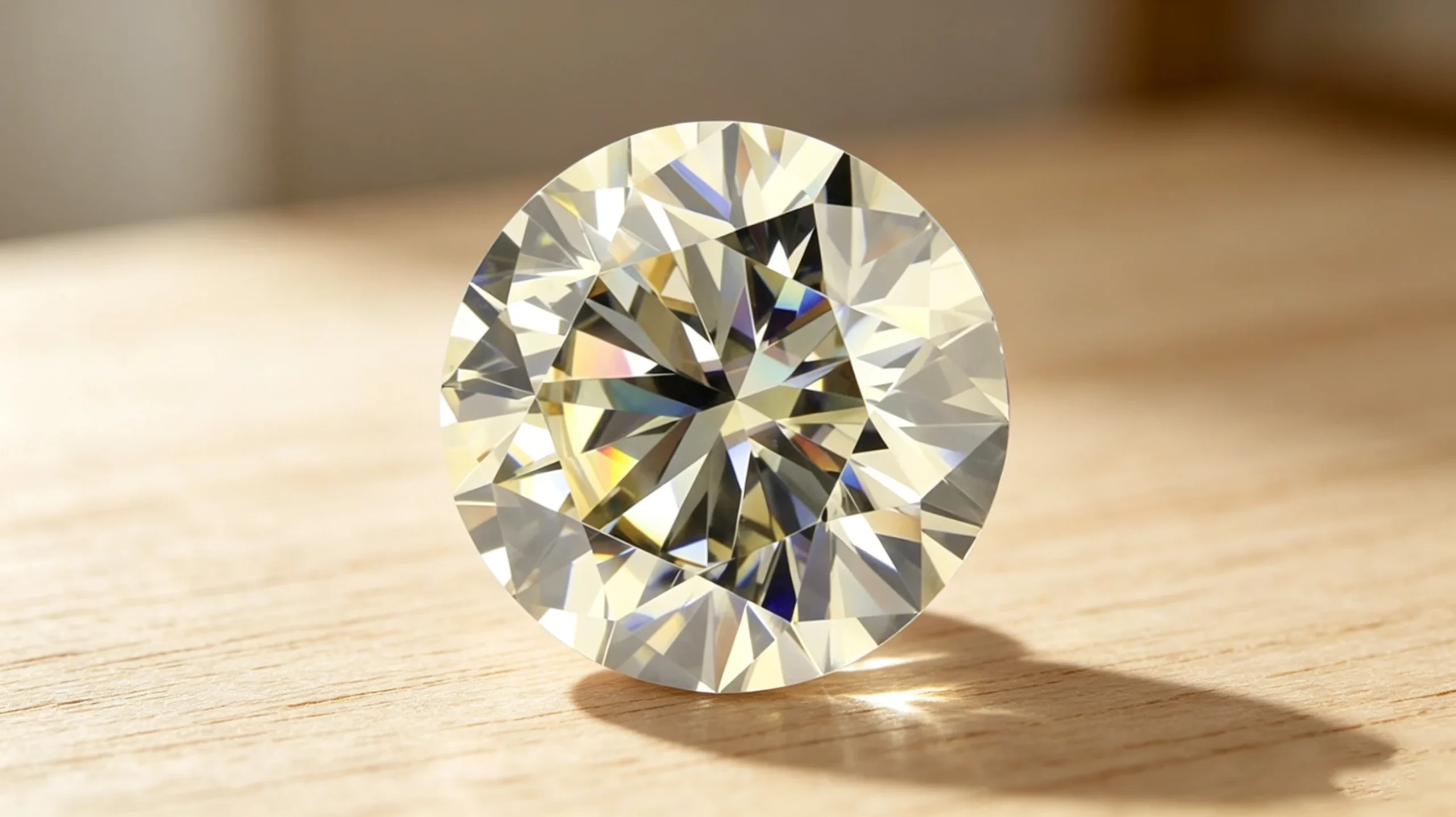
A halo, pave, or multi-stone design shares attention with accent stones. A solitaire does not. In a solitaire ring, buyers notice the face-up size, the outline, the color impression, and whether the stone looks clean immediately. That is why a stone that looks good on paper but only average in person can be disappointing in a solitaire setting.
For most buyers, round brilliant is the safest shape because it hides inclusions well, returns strong light, and works with almost every classic setting. If you prefer a round stone, the first question is not whether you need the top possible grade. The better question is which combination looks best once mounted.
Start with size and spread, not just carat weight
Carat weight alone can be misleading. Two diamonds with similar weight may face up differently if their proportions are deeper or shallower. In a solitaire ring, visible diameter matters because the entire design is built around one center stone.
A practical sweet spot for many buyers is around 1.0 to 1.5 carats. That size feels substantial, works well in both four-prong and six-prong settings, and still leaves room in the budget to choose better cut and cleaner appearance. If you want a real example, review our article on how to evaluate a 1.2 ct D color VVS lab-grown diamond. It shows the kind of proportions many solitaire buyers look for.
Choose color based on metal and expectation
Color is highly visible in a solitaire ring because there are no side stones to distract the eye. If you want a crisp icy look in platinum or white gold, D to F is the safer range. If you are using yellow gold or trying to control cost, G to H can still look very attractive once mounted.
The mistake many buyers make is paying for a color grade that matters less to them than cut or spread. If your goal is a white appearance without overspending, compare color and setting together. Our guide on D-F vs G-H lab-grown diamonds explains this trade-off in more detail.
Clarity: stop where the eye stops seeing the difference
In solitaire rings, clarity matters, but not every buyer needs VVS. Many well-cut VS1 or VS2 stones look perfectly clean to the naked eye and give better value than VVS grades. VVS becomes more attractive when you want a premium specification, a high color grade, and extra confidence for a larger center stone.
If value matters, do not assume higher clarity always means better buying. In many cases, VS is the point where beauty and price meet most efficiently. We covered that in more detail in Best Clarity for Lab-Grown Diamonds: When VS Is Better Value Than VVS.
Do not skip the certificate and proportions check
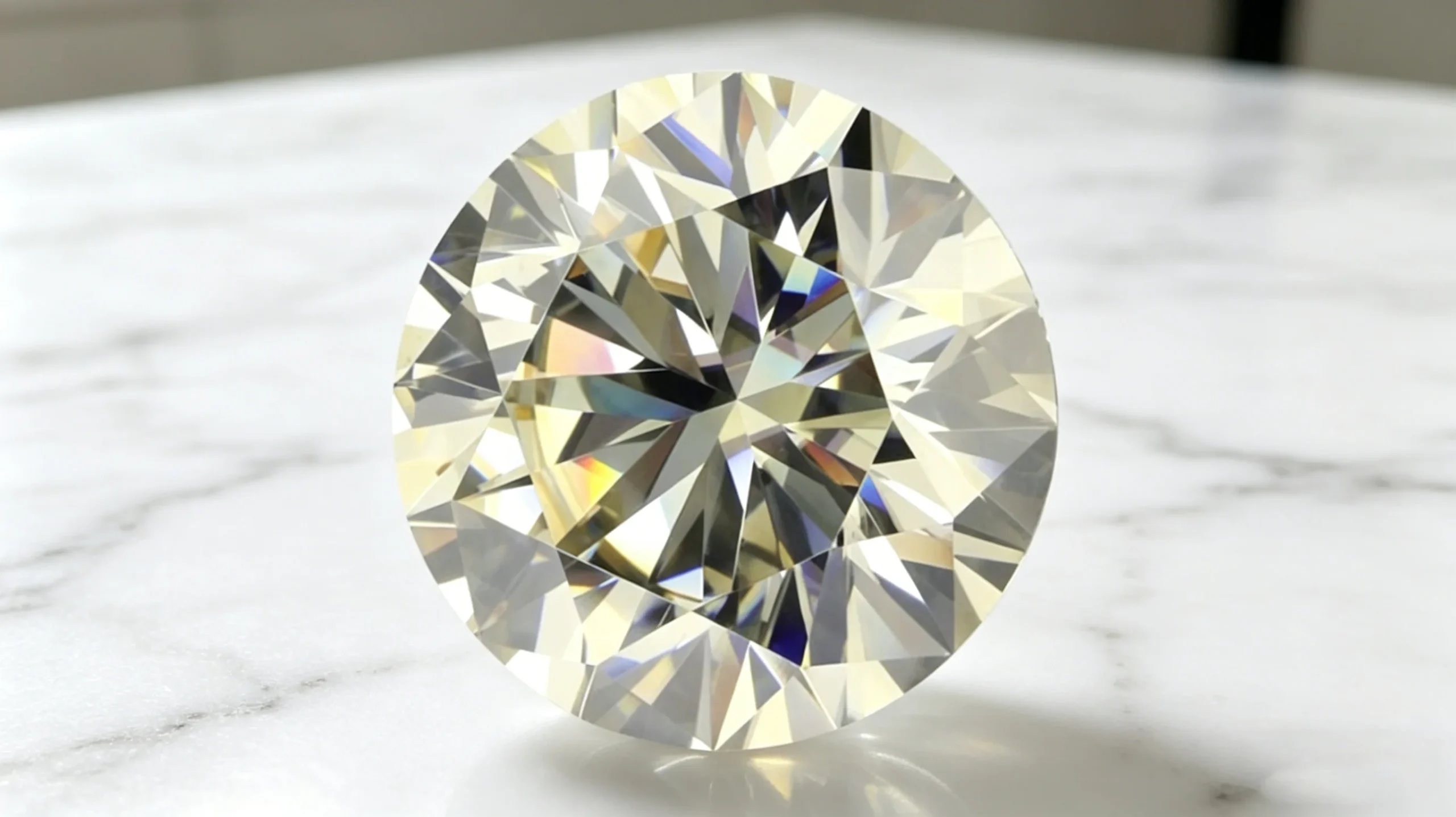
A solitaire ring buyer should never rely on the grade summary alone. Before you buy, verify the certificate number, compare measurements, and check whether the proportions support good face-up beauty. Table, depth, symmetry, and polish all influence how lively the stone looks.
If you are deciding between two diamonds with similar color and clarity, certificate details become even more important. Use our guides on comparing lab-grown diamonds with the same specs and verifying a lab-grown diamond certificate online before you make the final choice.
Match the diamond to the right solitaire setting
The best lab-grown diamond for a solitaire ring is not only about the stone. It also depends on how you want the finished ring to feel.
- Four-prong solitaire: shows more of the diamond and can make the stone feel slightly more open and angular. Browse our Solitaire Setting – Four Prong options if you want a lighter, more minimal look.
- Six-prong solitaire: gives a round stone a more classic outline and adds extra security, especially for daily wear. See our Solitaire Setting – Six Prong styles if you prefer a timeless engagement-ring appearance.
As a simple rule, buyers who want maximum diamond visibility often prefer four prongs, while buyers who want a traditional round presentation often choose six prongs.
A practical example of a strong solitaire candidate
For buyers who want a premium-looking round stone, this 1.2 ct D color VVS round lab-grown diamond is a useful benchmark. It offers a clean white look, a popular size range for solitaire rings, and a simple shape that works across classic settings. Even if you choose a different specification, using a real product as a reference makes comparison easier.
Quick checklist before you place an order
- Choose a size range that fits your setting style and budget, not just the biggest carat number.
- Match color to the metal you plan to use.
- Pay for clarity only until the stone looks eye-clean for your needs.
- Verify the certificate number and measurements.
- Compare four-prong and six-prong settings before deciding.
- Use a real product page as your final reference, not only a grading report.
Final thought
The best lab-grown diamond for a solitaire ring is the one that still looks impressive after you remove the marketing language and look at what actually matters: visible size, face-up brightness, clean appearance, reliable paperwork, and a setting that suits the wearer. If you want help matching a loose stone with the right solitaire style, contact us here and we can help you narrow the options faster.