A channel setting lab grown diamond band is one of the cleanest, most contemporary ways to line a ring with sparkle — a continuous row of diamonds sits flush between two walls of metal, with no prongs interrupting the line. It is the setting people picture when they want a sleek wedding band or an eternity ring that reads as a ribbon of light. But behind that seamless look is some of the most unforgiving bench work in jewelry making: every stone has to match, every seat has to be cut to the same depth, and a single chipped edge can ruin the whole row. This guide walks through how a setting factory actually builds a perfect channel-set band, step by step, and what you should check before you buy one.
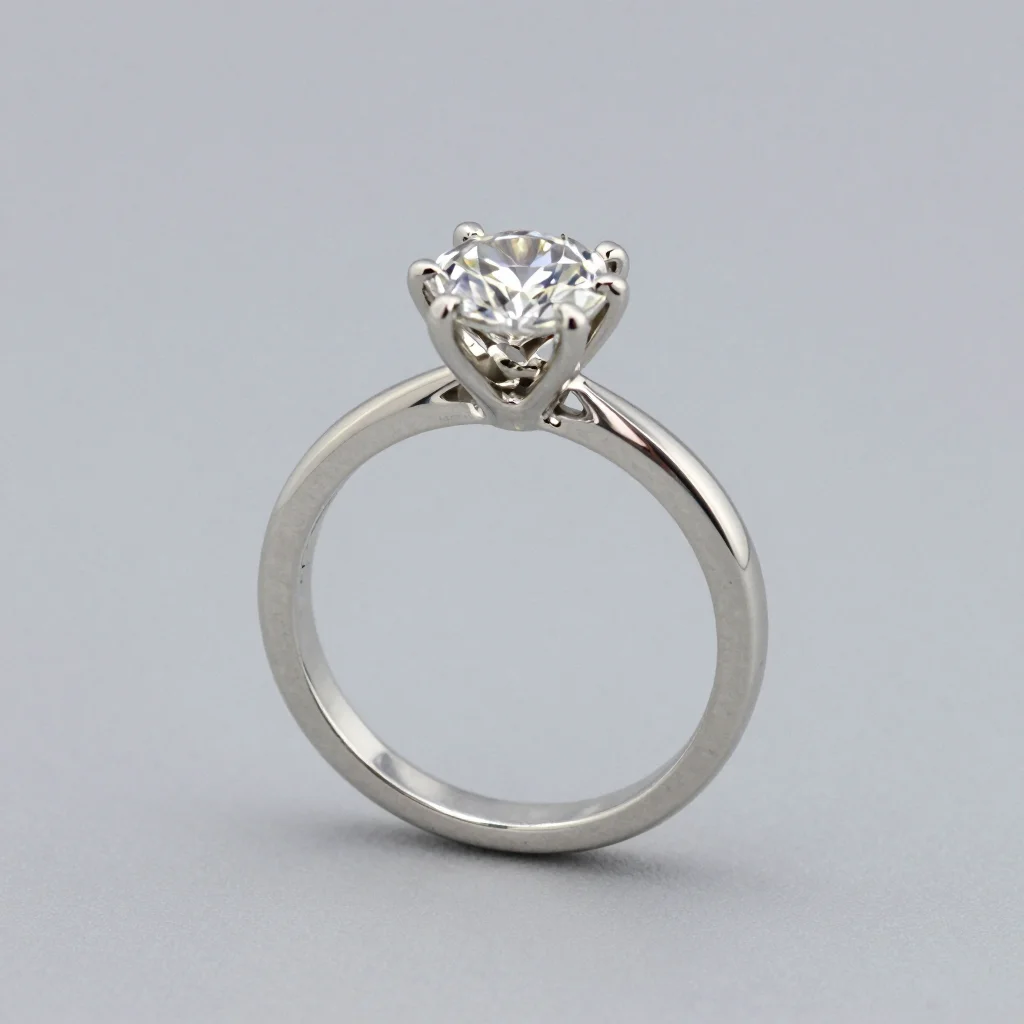
What Makes a Channel Setting Different
In a channel setting, the diamonds sit side by side inside a groove milled into the ring shank. The two sidewalls of metal fold slightly over the edge of each stone to lock it in — there are no individual prongs and no beads, just a continuous channel. That is what gives the band its smooth, modern silhouette and protects the girdles of the stones better than exposed prongs do. It is a close cousin of micro pavé, but where pavé uses tiny beads to hold many small stones, channel setting uses the sidewalls themselves to hold a row of calibrated rounds, princess cuts, or baguettes.
The trade-off is precision. Because the metal walls do all the holding, the stones must be cut to near-identical dimensions and the channel must be cut to match. There is almost no room to fudge a slightly oversized stone the way a prong setter can. That is why channel work is best done in a factory environment where stones can be sorted by diameter and the channel cut on a jig, not freehand at a single bench.
Step 1 — Sort and Match the Stones
A perfect channel starts before any metal is cut, with stone sorting. Even stones graded the same carat weight vary by a few hundredths of a millimeter in diameter. In a channel, that variation shows up as a wavy row or uneven gaps. So the setter pulls a larger batch of lab-grown diamonds and grades them by actual measured diameter, not just carat weight, then selects a run of stones within a tolerance of about ±0.02 mm. The closer the match, the straighter the finished row.
Consistent diameter depends on consistent cutting, which is why we start from well-cut rough. Our process for controlling cut quality and symmetry before a stone reaches the bench is what makes a matched run possible in the first place. For the same reason, the best cut grade matters more in a channel than in a solitaire — a poorly cut stone sits proud or low and breaks the line.
Step 2 — Cut the Channel to the Right Depth and Width
Once the stones are matched, the channel itself is milled into the ring. The width of the channel is set to the stone diameter plus a small clearance — typically about 0.05 mm per side — so the stone drops in without forcing but cannot tilt. The depth is the critical dimension: too shallow and the stone sits too high and the walls cannot fold over enough to hold it; too deep and the stone sinks below the metal and disappears. The target is for the table of each diamond to sit exactly flush with the top of the channel walls.
For a straight band this is straightforward. For a curved or tapered band — a graduated channel that narrows from the center toward the sides — the channel width changes along its length, which means the stones must be sorted into a matching graduated sequence as well. This is where most budget channel bands reveal themselves: the row looks pinched or gappy at the curve because the stones were not graduated to follow it.
Step 3 — Seat Every Diamond Precisely
With the channel cut, each stone gets its own seat. A bearing burr cuts a small lip into the inner wall of the channel at the exact height of each stone girdle, so the diamond rests on a precise ledge rather than floating in the groove. The stones are laid in order and checked for flushness under magnification. If one sits high, its seat is deepened; if one sits low, it is swapped for a marginally taller stone from the sorted run.
This is the same logic that governs prong setting versus bezel, just applied to a row: the seat, not the visible metal, carries the stone. The difference is that in a channel you cannot adjust one stone in isolation late in the process — re-seating one usually means loosening its neighbors, so the seating pass has to be right the first time.
Step 4 — Burnish the Walls Without Chipping
The final hold comes from burnishing — using a steel or tungsten tool to push a thin fold of the channel wall over the edge of each diamond. The tool presses only a few tenths of a millimeter of metal, just enough to lock the stone without covering its table. Done well, the fold is even and continuous and the row reads as an unbroken line of stone.
This is the step that punishes haste. Lab-grown diamond is real diamond — hard and brittle at the edge. A slip of the burnisher can chip a girdle, and a chipped stone in a channel cannot be quietly swapped the way a prong-set stone can, because removing it disturbs the wall fold of its neighbors. Setters work slowly, with the ring held firm, and check each fold under the loupe before moving on.
Common Channel-Setting Failures (and How a Factory Avoids Them)
- Wavy or uneven row — caused by unmatched stone diameters. Fixed by sorting to ±0.02 mm before cutting.
- Sunken stones — channel cut too deep. Fixed by cutting to a measured depth target, not by eye.
- Chipped girdles — forcing an oversized stone or a heavy-handed burnish. Fixed by matching stones to the channel and burnishing with light, even pressure.
- Loose stones after wear — wall fold too thin or only on one side. Fixed by burnishing both walls evenly and tension-testing every stone before the band ships.
Every finished band is tested: each stone is nudged with a brass probe to confirm it has no play, and the row is checked under magnification for flushness and even fold. A band that fails any of these goes back to the bench rather than out the door.
Choosing Stones and Metal for a Channel Band
Because the channel walls do the holding, metal choice matters. Platinum and 18K gold burnish beautifully and hold a crisp fold, but they are softer and can deform under heavy knocks; 14K gold is a popular middle ground for a band that will be worn every day. If you are weighing the metal, our 14K vs 18K gold comparison walks through the durability trade-off in detail.
For stones, round brilliants and princess cuts are the classic channel choices because their straight sides and predictable dimensions seat cleanly. Baguette and emerald-cut stones make a striking channel but demand even tighter sorting because their long straight edges exaggerate any mismatch — see our emerald cut lab grown diamond guide for why step-cut proportions are less forgiving. VS clarity is more than enough in a channel, since the setting hides inclusions near the girdle; our advice on when VS is better value than VVS applies doubly here.
Channel bands also stack beautifully. A slim channel-set band is one of the most popular wedding bands to pair with an oval engagement ring, and the same flush setting is what makes lab-grown diamond stud earrings and pavé engagement rings read as a clean field of sparkle.
Caring for a Channel-Set Band
Channel settings are protective — the walls shield the girdles — but dirt packs into the channel over time and dulls the row. Regular cleaning keeps the line bright, and an annual check that the wall folds are still tight is cheap insurance against a lost stone. Our lab-grown diamond ring care guide covers the cleaning and storage routine that suits a channel band.
The Bottom Line
A flawless channel setting lab grown diamond band is a manufacturing achievement as much as a design one: matched stones, a precisely cut channel, accurately seated diamonds, and an even burnished fold. When all four line up, you get that unbroken ribbon of light that makes the style so desirable — and when one slips, the whole row shows it. That is why a factory process, with sorting jigs and measured tolerances, beats a freehand bench for this setting every time. If you are planning a channel-set band and want it built to factory tolerances, reach out to us and we will walk you through stone selection, metal, and a production plan.