عندما تختار خاتمًا بسيطًا يحافظ على سلامة الماس المزروع في المعمل خلال سنوات من الارتداء اليومي, غالبًا ما يأتي القرار إلى أ إعداد دافق مقابل الحافة مقارنة. كلا التصميمين يضعان الحجر بالقرب من الإصبع ويتم الإشادة بهما لمتانتهما, لكنهم يحمون الجوهرة بطرق مختلفة جدًا. يساعدك فهم هذه الاختلافات على اختيار الاختلاف المناسب لأسلوب حياتك, شكل الحجر الخاص بك, والطريقة التي تريد أن يبدو بها خاتمك.
ما هو إعداد فلوش?
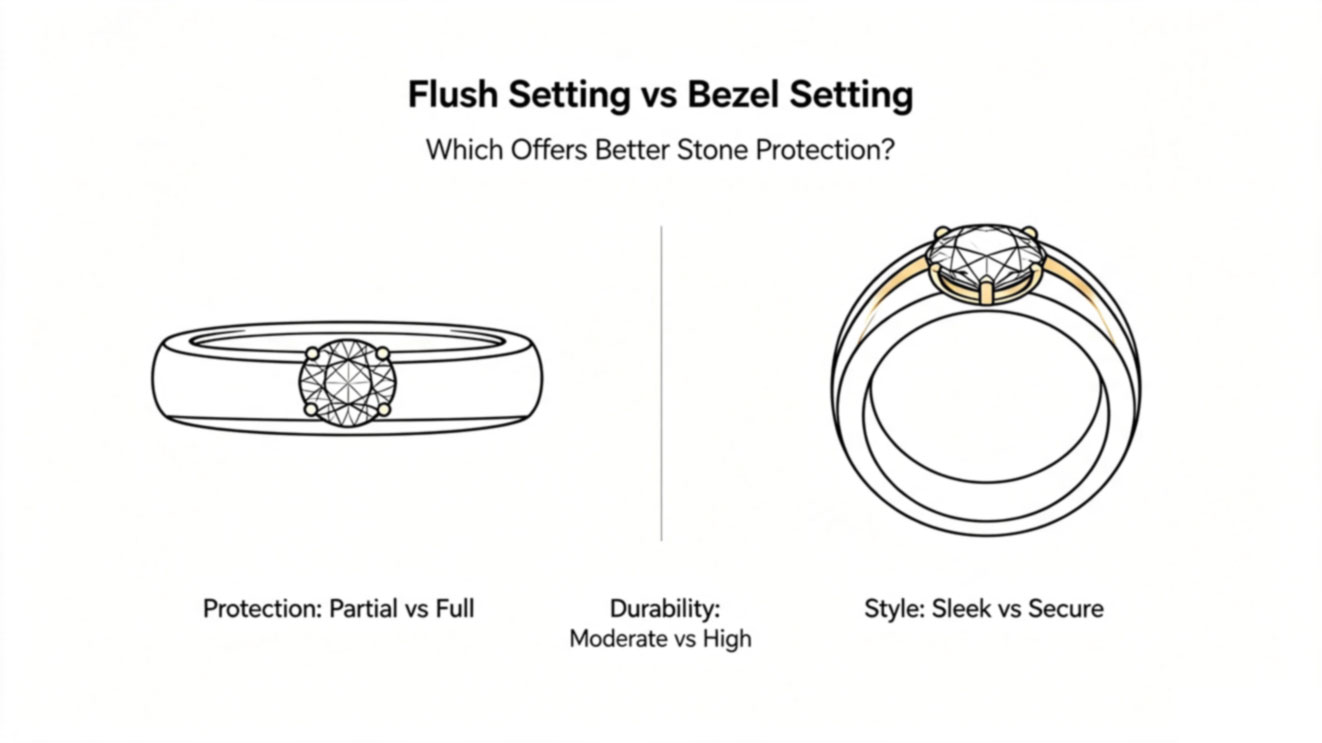
إعداد دافق (يُطلق عليه أحيانًا اسم الإعداد الغجري) هي الطريقة التي يتم فيها وضع الماس مباشرة في ثقب محفور في الشريط, مع طاولة الحجر مستوى الجلوس مع, أو أقل قليلا, سطح المعدن. لا توجد شوكات ولا حافة مرتفعة. يتم دفع المعدن, أو “مصقول,” على حافة الحجر لتثبيته في مكانه.
لأن الحجر يجلس منخفضا جدا, يعد إعداد التدفق أحد أكثر الخيارات التي يمكنك اختيارها راحة وخالية من العوائق. إنه مفضل لفرق الزفاف وللأشخاص الذين يعملون بأيديهم. إذا كنت تريد أن ترى كيف يتصرف هذا النمط في حلقة حقيقية, دليلنا إلى إعداد التدفق للماس المزروع في المختبر يمشي من خلال التصميم بالتفصيل.
ما هو إعداد الحافة?
يحيط إطار الإطار بمحيط الماس بالكامل بطوق رفيع, أو “مدي,” من المعدن. يتم تثبيت الحجر في مكانه بواسطة هذه الحافة المستمرة بدلاً من الشوكات الفردية. يمكن أن يكون الإطار مدي كامل, الذي يلتف بالكامل حول الحجر, أو مدي جزئي, مما يترك جزءًا من الحزام مكشوفًا.
يعد الإطار مكانًا آمنًا للغاية لأن الطوق المعدني يحمي حواف الحجر من الصدمات. إنه خيار ممتاز لمرتديها النشطين وللأحجار الناعمة أو الأكثر هشاشة. لأنه يمكن تشكيل الياقة لتتبع الخطوط العريضة للجوهرة, كما أنه يعمل بشكل جميل مع الأشكال غير العادية مثل قطع الماركيز والكمثرى, يشبه إلى حد كبير إعداد على شكل حرف V للماس المزروع في المعمل من نوع الماركيز والكمثرى.
إعداد فلوش مقابل الحافة: الاختلافات الرئيسية
عندما تزن أ إعداد دافق مقابل الحافة, الاختلافات الرئيسية تتلخص في أربعة أشياء: حماية, حساب تعريفي, أداء خفيف, وكيف يتم تأمين الحجر.
1. حماية الحجر
هذا هو جوهر السؤال. يوفر إعداد الإطار أعلى مستوى من حماية الحافة لأن الطوق المعدني يحمي حزام الحجر بالكامل. إذا ضربت يدك على إطار الباب, يمتص الإطار التأثير بدلاً من الماس.
إعداد التدفق يحمي الحجر جيدًا أيضًا, ولكن بطريقة مختلفة. لأن الماس يقع تحت سطح الشريط, إنه محمي من الأعلى. لكن, تكون حواف الحجر مكشوفة أكثر من الحواف, لذا فإن الضربة الخاطفة لا تزال قادرة على قطع الزاوية. للحصول على أقصى قدر من الحماية, الإطار هو الخيار الأكثر أمانًا.
2. الملف الشخصي والراحة
كلا الإعدادين منخفضان, لكن إعداد التدفق هو الأكثر تسطحًا بين الاثنين. الحجر على مستوى المعدن, لذلك لا يوجد أي شيء تقريبًا يلتصق بالملابس أو القفازات. يقع الإطار أعلى قليلاً بسبب الياقة, على الرغم من أنه لا يزال أقل بكثير من الإعداد الشق.
إذا كانت الراحة والملف الشخصي السلس تمامًا من أولوياتك, يفوز إعداد التدفق. إذا كنت تريد المزيد من الحضور المرئي مع الحفاظ على مستوى منخفض من الاهتمام, الإطار هو حل وسط جيد.
3. أداء خفيف
يغطي الإطار الكامل جزءًا من الحجر, والتي يمكن أن تقلل قليلاً من كمية الضوء التي تدخل من الجوانب. إعداد دافق, مع الجدول المكشوف, غالبًا ما يسمح لمزيد من الضوء بالوصول إلى التاج. قال ذلك, يمكن أن يبدو كلا الإعدادين رائعين عندما يتم قطع الماس جيدًا, والفرق عادة ما يكون دقيقا.
4. كيف يتم تأمين الحجر
إطار يحمل الحجر بحافة معدنية متواصلة, وهو آمن للغاية ونادراً ما يحتاج إلى إعادة تشديده. يعتمد إعداد التدفق على صقل المعدن على حافة الحجر. متأخر , بعد فوات الوقت, ومع ارتداء الثقيلة, يمكن أن يخفف إعداد التدفق قليلاً وقد يحتاج إلى إعادة صقله بواسطة صائغ.
أي واحد يجب أن تختار?
لا يوجد واحد “أفضل” الإجابة في إعداد دافق مقابل الحافة مناظرة, لأن الاختيار الصحيح يعتمد على الطريقة التي تخططين بها لارتداء الخاتم.
- اختر أ إعداد مدي إذا كنت تريد أقوى حماية ممكنة لحواف حجرك, إذا كنت نشيطًا جدًا, أو إذا كنت تقوم بوضع جوهرة أكثر ليونة أو أكثر هشاشة.
- اختر أ إعداد دافق إذا كنت تريد المسطحة, الملف الشخصي الأكثر راحة ممكن, إذا كنت لا تحب أي شيء يلتصق بالقماش, أو إذا كنت تريد نظيفة, نظرة الحد الأدنى.
كلاهما أكثر متانة بكثير من الإعداد المسنن, ولهذا السبب يوصى بهما في مقارنتنا لـ أي نوع من الماس هو الأكثر متانة.
ملاحظة حول الجودة والحرفية
أيًا كان النمط الذي تختاره, إن جودة عمل الإعداد مهمة بقدر أهمية التصميم. يمكن أن يجلس الإطار السيئ الصنع بشكل غير متساو, ويمكن أن يؤدي وضع التدفق السيئ المصقول إلى ترك الحجر مفككًا. وهذا هو السبب في أنه من المفيد العمل مع الشركة المصنعة التي تقوم بفحص كل قطعة. يمكنك أن تقرأ عن الشيكات التي تدخل في حلقة جيدة الصنع في مقالتنا حول كيف يكتشف المصنع عيوب الإعداد قبل الشحن.
الأفكار النهائية
في النهاية, ال إعداد دافق مقابل الحافة الاختيار يدور حول موازنة الحماية, راحة, والأسلوب. إذا كانت أولويتك هي حماية الحافة وطوق آمن, اختر مدي. إذا كانت أولويتك هي ملف التعريف الأكثر تسطحًا والسلاسة, حلقة خالية من العوائق, اختر إعداد التدفق. كلاهما ممتاز, خيارات متينة من شأنها أن تحافظ على أمان الماس المزروع في المختبر لعقود من الزمن.
إذا كنت على استعداد لصنع خاتم, فريقنا في وينتوورث الماس يمكن أن تساعدك في اختيار الإعداد الذي يناسب حجرك وأسلوب حياتك.