إن أنواع الترصيع الماسي التي تختارها تقرر أكثر بكثير من مجرد شكل الخاتم. الإعداد الصحيح يحمي الحجر, ويظهر ذلك في أبهى صوره, ويصمد أمام سنوات من الارتداء اليومي; الشخص الخطأ يمكن أن يترك ألماسة جميلة مكشوفة, غير مستقر, أو ببساطة مخفية. المفتاح هو مطابقة أنواع ترصيع الماس مع قطع الحجر - فالشكل الدائري اللامع والشكل الكمثري لهما احتياجات مختلفة تمامًا. يستعرض هذا الدليل أنواع ترصيع الماس الرئيسية ويشرح أي القطع يناسب كل منها بشكل أفضل.
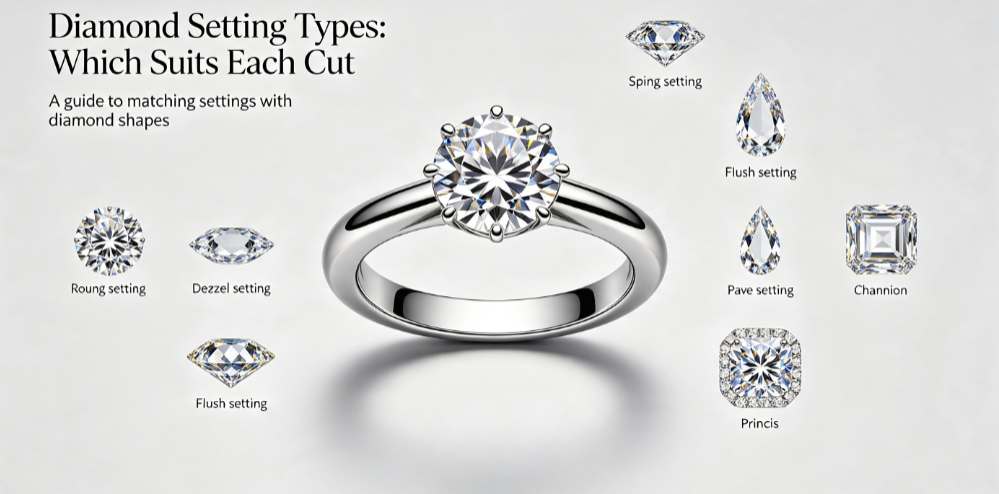
أنواع إعداد الماس الرئيسية
قبل مطابقة القطع, فهو يساعد على معرفة اللاعبين. هذه هي أنواع ترصيع الألماس الأكثر شيوعًا التي ستقابلها عند التسوق لشراء خاتم:
إعداد الشق. الماس ممسك بسلسلة من المخالب المعدنية, عادة أربعة أو ستة, التي تمسك الحجر حول حزامه. إنه النمط الأكثر شيوعًا لأنه يسمح بوصول الحد الأقصى من الضوء إلى الماس.
إعداد الحافة. حافة معدنية تلتف بالكامل حول حافة الحجر. يوفر حماية ممتازة وأنيقة, نظرة حديثة.
إعداد دافق. يتم وضع الماس في ثقب محفور بحيث تكون طاولته مستوية مع السطح المعدني. مشهورة بالعصابات والتصميمات منخفضة المستوى.
إعداد القناة. يصطف الماس في صف واحد بين جدارين معدنيين, مع عدم وجود شوكات بين الحجارة. المفضلة للأبدية وفرق الزفاف.
إعداد الوسادة. يتم وضع قطع الماس الصغيرة بشكل وثيق مع حبات معدنية صغيرة, خلق سطح متلألئ مستمر.
إعداد التوتر. يتم الإمساك بالألماس من خلال الضغط الشبيه بالزنبرك للحزام نفسه, مع عدم وجود شوكات أو مدي مرئية.
كل نوع من أنواع ترصيع الماس هذه له نقاط قوة خاصة به, وكل أزواج أفضل مع قطع معينة من غيرها.
جولة رائعة: القطع الأكثر مرونة
تعتبر قطع الماس المستديرة الأكثر شعبية في العالم, وهو أيضًا الأكثر تسامحًا عندما يتعلق الأمر بأنواع ترصيع الماس. إن مخططها المتناسق وشكلها القوي الخالي من الزوايا يعني أن أي إعداد تقريبًا يعمل بشكل جيد.
أ سوليتير بستة شوكات هو الاختيار الكلاسيكي, توفر الأناقة والأمان على حد سواء - تحمي الشوكات الإضافية الحزام المستدير من الصدمات. أ أربعة الشق الإصدار أكثر بساطة ويظهر المزيد من الحجر, على حساب حماية أقل قليلا. للمشترين الذين يريدون أقصى قدر من الأمن, أ مدي حول دائري رائع يعطي مظهرًا عصريًا مع حماية متميزة.
لأن القطع الدائري متعدد الاستخدامات, عادةً ما يعتمد القرار على الأسلوب وليس الضرورة، ولهذا السبب يظل الخيار الأول الأكثر أمانًا لخواتم الخطوبة.
قطع الأميرة: الحماية هي كل شيء
قطع الأميرة عبارة عن مربع أو مستطيل لامع أربع زوايا حادة - وهذه الزوايا هي أكبر نقاط ضعفها. إعداد الشق القياسي يترك الزوايا مكشوفة, ويمكن لضربة واحدة أن تحطمهم.
للأحجار المقطوعة على شكل أميرة, أفضل أنواع ترصيع الماس هي تلك التي تحمي الزوايا:
- أ إعداد الشق V, حيث تكون الشوكات في كل زاوية على شكل حرف V لتلتف حول النقاط الحادة
- أ إعداد مدي, الذي يغطي الحافة بأكملها بما في ذلك الزوايا
- أ إعداد القناة لأحجار الأميرة على التوالي
القاعدة العامة بسيطة: إذا كان الإعداد لا يحمي الزوايا, إنه الاختيار الخاطئ لقص الأميرة. يعد هذا أحد أوضح الأمثلة على أهمية مطابقة أنواع ترصيع الماس مع القطع.
قطع الزمرد والأشر: اظهار جوانب الخطوة
قطع الزمرد والأشر هي أشكال مقطوعة بشكل متدرج طويلة, جوانب مفتوحة وزوايا مقطوعة. هم قصب السبق لأناقتهم “قاعة المرايا” تأثير, لكن طاولتها الكبيرة وتاجها المفتوح يعني أنه من السهل رؤية الشوائب - وأوجهها المتدرجة أقل تسامحًا مع الأبعاد السيئة.
لهذه التخفيضات, أفضل الإعدادات هي تلك التي الحفاظ على الحجر مرتفعا ودون عائق:
- أ إعداد أربعة الشق مع كبيرة, شوكات مستقيمة في الزوايا
- أ إعداد مدي من أجل أكثر حداثة, نظرة محمية
- إعدادات القناة عندما يتم استخدام أحجار متعددة القطع في خط واحد
في الواقع، تجعل الزوايا المقطوعة من قطع الزمرد والأشر حمايتها أسهل من قطع الأميرة - حيث يتم وضع شوكة الزاوية في وضع جيد بشكل طبيعي على الزاوية المقطوعة. ما زال, تستحق الجوانب المفتوحة الواسعة إعدادًا لا يزحمها بالمعدن.
قطع الوسادة: الكلاسيكية التي تتألق في العديد من الإعدادات
قطع الوسادة عبارة عن مربع مستدير بزوايا ناعمة وجوانب كبيرة تضفي الدفء, بريق رومانسي. إنه يتماشى بشكل جميل مع كل نمط إعداد تقريبًا, مما يجعلها المفضلة للتصاميم المخصصة.
الوسائد تبدو مذهلة في إعداد هالة, حيث تحيط حلقة من الماس الأصغر بالحجر المركزي وتعزز حجمه المتصور. كما أنها تعمل بشكل جيد في إعدادات الشق مع شوكات أكثر سمكًا قليلاً تعكس منحنيات الحجر الناعمة, أو في أ مدي للحصول على مظهر عصري ونظيف.
لأن قطع الوسادة نادرًا ما تحتوي على نقاط حادة يجب حمايتها, يعود الاختيار إلى الشكل الذي تريده - وهو قرار مناسب تمامًا لمحادثة الإعداد المخصص.
قطع الماركيز والكمثرى: التحدي المدبب
قطع الماركيز والكمثرى لها نصيحة مدببة هذا هو الجزء الأكثر هشاشة من أي الماس. هذه النصيحة هي المكان الذي تحدث فيه الرقائق, وهذا هو بالضبط المكان الذي تفشل فيه العديد من الإعدادات القياسية في المساعدة.
يحتاج الطرف المدبب إلى حماية مخصصة, وهذا هو السبب أ إعداد على شكل حرف V للماس المزروع في المعمل من نوع الماركيز والكمثرى هو الحل الأمثل - يلتف الشق على شكل حرف V حول النقطة بدلاً من تركها مكشوفة. إعداد الإطار هو الخيار الآمن الآخر, تغطي الحافة بالكامل.
تعد هذه واحدة من أقوى الحجج لفهم أنواع ترصيع الألماس قبل الشراء: يمكن أن يكون نفس الحجر الجميل محميًا جيدًا أو بعيدًا عن التلف, اعتمادا كليا على الإعداد.
تخفيضات بيضاوية ومشعة: متوازن ومتسامح
تقع القطع البيضاوية والمشعة بين الطرفين. الأشكال البيضاوية ليس لها زوايا حادة, لذلك يتحملون معظم الإعدادات, على الرغم من أ ستة الشق أو من الحكمة استخدام تخطيط الشق المعزز قليلاً بالنسبة للأحجار الأكبر حجمًا. مشع, مثل تخفيضات الأميرة, تحتوي على زوايا تستحق شوكات على شكل حرف V أو إطارًا للحماية الكاملة.
متانة: ما هي أنواع الترصيع الماسي التي تدوم لفترة أطول؟?
أبعد من مطابقة التخفيضات, المتانة هي العامل الكبير الآخر في اختيار أنواع ترصيع الماس. إذا كنت تريد معرفة الأنماط التي تصمد بشكل أفضل تحت الملابس اليومية الحقيقية, دليلنا ل أي نوع من الماس هو الأكثر متانة يصنف الخيارات الشائعة حسب مدى حمايتها للحجر مع مرور الوقت.
النسخة القصيرة: إعدادات الحافة والتدفق توفر أفضل حماية لأنها تغطي حواف الحجر; إعدادات الشق إظهار المزيد من الماس ولكن كشف الحزام; و إعدادات الوسادة أضف البريق ولكن أحضر الحجارة الصغيرة التي تحتاج إلى فحص منتظم. إن المفاضلة بين إظهار الحجر وحمايته هو جوهر كل قرار تحديد.
مقارنة الحماية: فلوش مقابل الحافة
اثنان من أكثر أنواع ترصيع الماس التي تركز على الحماية هما المتدفق والإطار, وغالبًا ما يسأل المشترون عن كيفية المقارنة. كلاهما يبقي الحجر منخفضًا وآمنًا, لكنهم يختلفون في المظهر, أداء خفيف, وكيف يشعرون على الإصبع. لدينا مقارنة مفصلة ل إعداد التدفق مقابل إعداد الحافة يكسر بالضبط الأشكال الحجرية التي تناسب كل منها وأين يقصر كل منها.
مطابقة الإعداد للمعادن
أنواع الترصيع الماسي لا تشكل سوى نصف المعادلة - فالمعدن المصنوع منها له نفس القدر من الأهمية. شوكات رقيقة تحتاج إلى معدن قوي; تحتاج أعمال الرصف الثقيلة إلى سبيكة يمكنها حمل الحجارة الصغيرة دون تآكل. إذا كنت تقرر بين سبائك الذهب, المقارنة بيننا 18الذهب K مقابل 14K مقابل 9K لإعدادات الماس المزروعة في المعمل يغطي الاختلافات العملية في الصلابة والمتانة.
إعدادات الطلب للتخفيضات الخاصة بك
بمجرد معرفة أنواع ترصيع الماس التي تتوافق مع القطع التي تبيعها, والخطوة التالية هي تحديد مصادر الجبال. يشتري العديد من المجوهرات والمصممين إعدادات خاتم الماس فقط من المصنع - حوامل جاهزة بالأسلوب الصحيح, بدون حجر - ويضعون الماس الخاص بهم لاحقًا. يمنحك شراء التركيبات بهذه الطريقة إمكانية الوصول إلى الأسعار على مستوى المصنع والجودة المتسقة عبر الأنماط.
كما أنه يساعد على فهم كيفية صنع التركيب فعليًا, من نمذجة CAD إلى الصب إلى الفحص النهائي. دليلنا خطوة بخطوة ل عملية وضع الماس يمشي خلال الرحلة بأكملها, ونظرتنا إليها كيف يكتشف المصنع عيوب الإعداد قبل الشحن يشرح فحوصات الجودة التي تفصل بين أدوات التثبيت الجيدة والأدوات السيئة.
الحفاظ على إعداداتك في حالة جيدة
ولكن عليك أن تختار بعناية أنواع الترصيع الماسي لخاتمك, لا يوجد إعداد خالي من الصيانة. تتآكل الشوكات مع مرور سنوات من الاستخدام, والشق البالي هو حجر فضفاض ينتظر حدوثه. إذا لاحظت أن الشق يبدو أرق مما كان عليه من قبل, دليلنا على تآكل الشوكة وعندما يحتاج ترصيع الماس إلى استعادة سمك الشوكة يشرح العلامات التحذيرية وكيفية القيام بأعمال الإصلاح.
خاتمة
أفضل أنواع ترصيع الألماس هي تلك التي تتطابق مع القطع، مما يحمي أضعف نقاطه, وإظهار أفضل جوانبه, وتناسب الطريقة التي سيتم ارتداؤها بها بالفعل. تعتبر القطع المستديرة اللامعة هي الأكثر مرونة, تتطلب قطع الأميرة حماية الزاوية, تحتاج أحجار المركيز والكمثرى إلى شوكات على شكل حرف V أو إطار, والتخفيضات المتدرجة تستحق التنظيف, إعدادات دون عائق.
سواء كنت تختار إعدادًا لخاتم الخطوبة الخاص بك أو تبحث عن مصادر لمجموعة, المبدأ هو نفسه: فهم القطع أولا, ثم اختر الإعداد الذي يخدمه. وعندما تكون جاهزًا للمصدر, من ذوي الخبرة مصنع الماس المزروع في المختبر يمكن أن تساعدك على مطابقة أنواع ترصيع الألماس المناسبة مع الأحجار المناسبة منذ البداية.