ما هو إعداد V-Prong?
أ إعداد الشق V هي واحدة من أذكى الطرق لعقد مدبب, ممدود الماس المزروع في المختبر, وهي أهم التفاصيل التي يجب الحصول عليها بشكل صحيح عند قيامك بوضع قطع الماركيز أو الكمثرى. وينتهي هذان الشكلان بنقطة حساسة (ال “نصيحة”), وهذا الطرف هو الجزء الأكثر ضعفًا في الحجر. الشق ذو البناء السيئ يترك النقطة دون حماية, حيث يمكن أن رقاقة, عقبة على الملابس, أو حتى تنزلق مع مرور الوقت. شوكة على شكل حرف V جيدة الصنع تحتضن الطرف في طبقة واقية “V” من المعدن, الحفاظ على الماس جميل وآمن.
إذا كنت تقارن كيفية حمل الحوامل المختلفة للحجر المزروع في المختبر, يشرح هذا الدليل سبب الماس المزروع في المختبر على شكل حرف V الجمع هو الخيار الأكثر أمانًا للتخفيضات المدببة, وما الذي يجب البحث عنه بالضبط في الصناعة اليدوية.
في وضع V-prong, الشق المعدني ليس عمودًا دائريًا عاديًا. بدلاً من, على شكل أ “V,” بحيث يلتف حول طرف الماسة المدبب من كلا الجانبين. وهذا يمنح الطرف مهدًا كاملاً للحماية المعدنية بدلاً من نقطة اتصال واحدة.
ل قطع ماركيز, الذي لديه نقاط في كلاهما ينتهي, يستخدم التكوين النموذجي شوكتين على شكل حرف V (واحد في كل طرف) بالإضافة إلى شوكتين جانبيتين أو أكثر لتثبيت الحواف الطويلة. ل قطع الكمثرى, النقطة المفردة في الأعلى تحصل على شوكة على شكل حرف V واحدة, بينما يتم تأمين الجزء السفلي المستدير بواسطة شوكات قياسية.
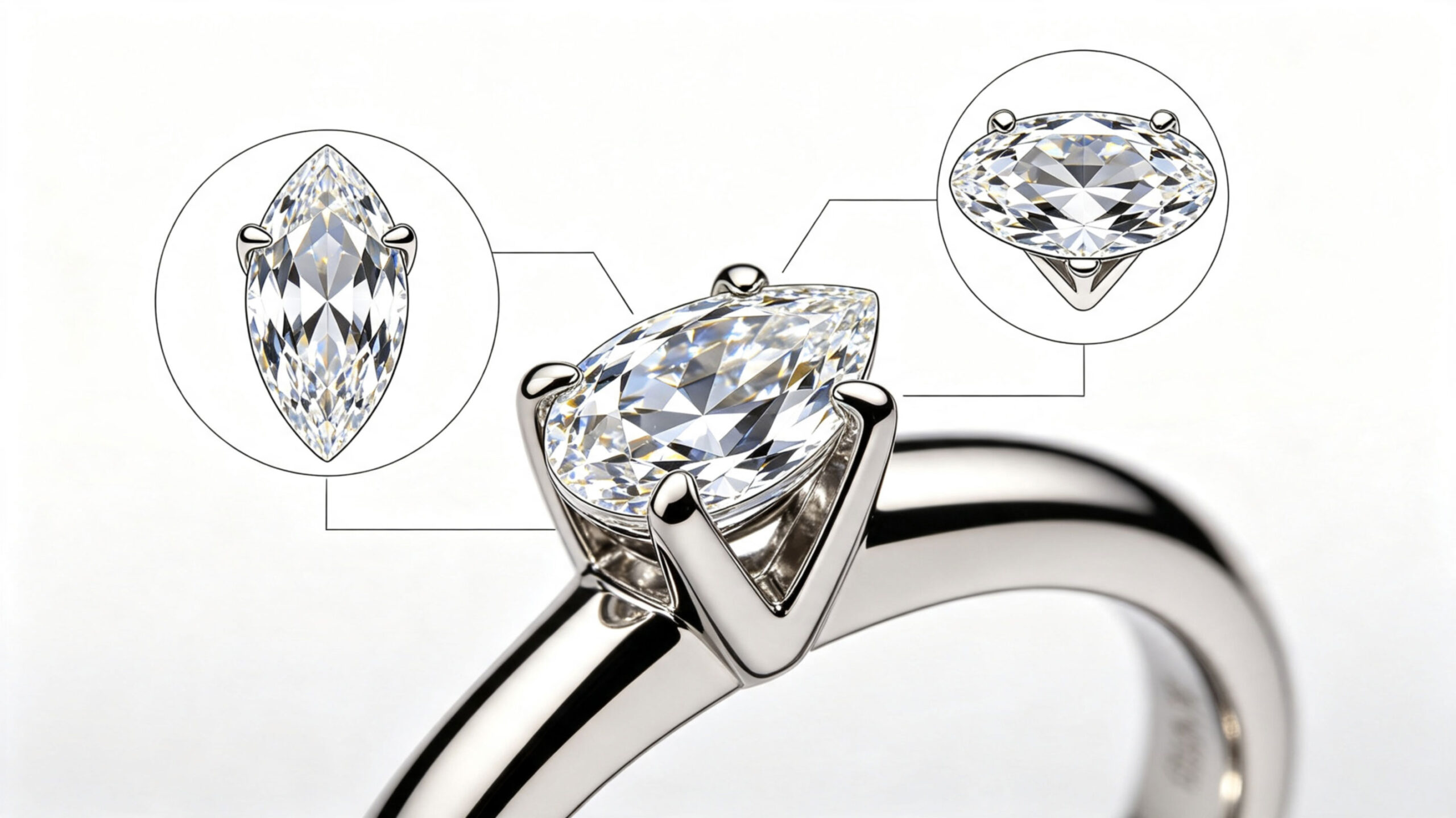
والنتيجة هي إعداد يحمي الطرف من الصدمات, يقفل الماس بحيث لا يمكنه الدوران أو الانزلاق, ويحافظ على الحجر منخفضًا وأنيقًا بحيث تبرز الصورة الظلية الطويلة.
لماذا تحتاج القطع المدببة إلى V-Prong
يُقدر الماس الماركيز والكمثرى بكيفية جعل الإصبع يبدو أطول وأنحف. ولكن هذا نفس طويلة, الهندسة المدببة تخلق تحديات هندسية حقيقية.
إن طرف قطع الماركيز أو الكمثرى عبارة عن نقطة رقيقة من الكريستال. تحت الملابس اليومية يلتقي بالأبواب, الجداول, وحقائب اليد. مع الشق المستديرة القياسية, جزء من تلك النقطة يمكن أن يبقى مكشوفًا فوق المعدن, وهو بالضبط المكان الذي تحدث فيه الرقائق. أ الماس المزروع في المختبر على شكل حرف V يزيل التركيب هذا الخطر لأن المعدن المسنن يرتفع ليلتقي بالنقطة من كلا الجانبين, لذلك لا يبرز الطرف بدون حماية أبدًا.
هذا ينطبق بشكل خاص على الماس المزروع في المختبر. لأن الماس المزروع والمستخرج في المختبر يتمتع بالصلابة والمتانة نفسها, الماركيز أو الكمثرى المزروعة في المختبر معرضة تمامًا لتلف الأطراف, وكل جزء يستحق حماية على شكل حرف V.
شوكات على شكل حرف V, عدد الشق, والأمن
كم عدد الشوكات التي يحتاجها الإعداد الخاص بك? ذلك يعتمد على الشكل.
- قطع ماركيز: عادة 6 شوكات; شوكتان على شكل حرف V تغطي كلا الطرفين وأربعة شوكات جانبية (اثنان لكل حافة طويلة). تستخدم بعض التصاميم 4 (شوكتان على شكل حرف V بالإضافة إلى شوكتين جانبيتين) للحصول على مظهر أنظف.
- قطع الكمثرى: عادة 5 ل 6 شوكات; شوكة واحدة على شكل حرف V عند هذه النقطة, بالإضافة إلى أربعة أو خمسة حول الحزام المستدير.
المزيد من الشوكات تعني المزيد من الأمان, ولكن الكثير منها يمكن أن يسبب فوضى في حجر صغير. إن التوازن بين الجمال والأمان هو بالضبط ما يتعامل معه صائغ ذو خبرة عندما يتم الترصيع يدوياً.
أحد المخاوف الشائعة هو أن الشوكة على شكل حرف V تجعل الماسة تبدو وكأنها “مغطاة.” إن الشق V المصنوع بمهارة رفيع وأنيق; يُقرأ كخط معدني نظيف عند الطرف, ليست قبعة ضخمة. أحسنت, يمكن أن يعكس أيضًا الخطوط العريضة للحجر ويجعل القطع يبدو أكثر دقة.
وضع الماس المدبب المزروع في المختبر: ما يحصل عليه الصانع بشكل صحيح
نوعية أ الماس المزروع في المختبر على شكل حرف V جبل يعيش في تفاصيل التصنيع. فيما يلي النقاط الحرفية الأكثر أهمية:
- سمك المعدن عند الطرف. يجب أن يكون الشق على شكل حرف V سميكًا بدرجة كافية لتثبيت النقطة تحت الضغط ولكنه رقيق بدرجة كافية ليبدو رقيقًا. رقيقة جدًا وسوف تنحني; سميكة جدًا وتغطي الحجر.
- نقطة اتصال مثالية. ال “V” يجب أن يلتقي بالحزام عند الطرف تمامًا, توزيع الضغط بالتساوي بدلاً من الضغط على مكان واحد.
- مصقول, حواف مدورة. حواف مسننة خشنة تلتصق بالسترات والقماش. لمسة نهائية ناعمة تحمي مرتديها والماس.
- محاذاة الشق المتوازن. للماركيز, يجب أن يجلس كلا الشوكتين على شكل حرف V في خط مستقيم مع المحور الطويل, أو الحجر سوف تبدو ملتوية.
قبل أن يصل إليك الخاتم, يقوم أحد المصانع ذات السمعة الطيبة بفحص كل شق بحثًا عن هذه العيوب. عملية مراقبة الجودة لدينا تكتشف المشكلات قبل الشحن; اقرأ كيف يكتشف المصنع عيوب الإعداد قبل الشحن لمعرفة كيف يبدو الفحص الشامل.
V- الشق مقابل. إعدادات أخرى للتخفيضات المدببة
تعتبر الشوكات على شكل حرف V هي الحل الأمثل لأحجار الماركيز والكمثرى, لكنها ليست الخيار الوحيد. وهنا كيف يقارنون:
| جلسة | أفضل ل | حماية نصيحة |
|---|---|---|
| الشق الخامس | ماركيز, كمثرى | ممتاز; الطرف ممهد بالكامل |
| الشق الدائري القياسي | دائري, وسادة, مشع | ضعيف عند الأطراف المدببة |
| مدي | كل يوم, ملابس رياضية | ممتاز; محيط معدني كامل |
| إعداد التوتر | حديث, الحد الأدنى | معتدل; يتطلب معدن سميك |
إذا كنت تحب النظافة, مظهر مكشوف لجبل حديث, أ ضبط التوتر في مختبر الماس المزروع يمكن أن تكون مذهلة, ولكن بالنسبة للماركيز أو الكمثرى المدببين، عادةً ما يوفر الشق على شكل حرف V حماية أفضل دون التضحية بالتصميم المفتوح. من أجل أكثر انسيابية, البديل الوقائي, أ مختبر إعداد التدفق للماس المزروع يستحق النظر في ارتداء ملابس منخفضة المستوى.
اختيار المعدن المناسب لجهاز V-Prong الخاص بك
يؤثر المعدن الذي تختاره على القوة واللون. لرقيقة, واقية على شكل حرف V, المعادن الصلبة تحافظ على شكلها بشكل أفضل:
- البلاتين هو الأقوى والأكثر دواما, ويتناغم لونها الأبيض بشكل جميل مع الماس عديم اللون المزروع في المعمل. يقاوم الانحناء, لذلك يبقى الشق البلاتيني على شكل حرف V آمنًا لعقود من الزمن. نحن نحلل المفاضلات في دليلنا ل البلاتين مقابل الذهب الأبيض عيار 18 قيراطًا لإعدادات الماس المزروعة في المعمل.
- 18ك الذهب الأبيض هو ليونة, بديل أكثر دفئا.
- 14ك الذهب يوفر قوة أكبر من 18K مع الحفاظ على مظهر مشرق, والذي يمكن أن يكون اختيارًا ذكيًا للحجر المدبب الذي يمكن ارتداؤه يوميًا. للحصول على مقارنة كاملة للخيارات المعدنية, انظر دليلنا على 14K مقابل 18K الذهب لخواتم الخطوبة.
الخط السفلي
إذا تم وضع قلبك على ماركيز أو كمثرى مزروع في المختبر, أ إعداد الشق الخامس هي الطريقة الأكثر أمانًا والأكثر أناقة لارتدائه. الواقية “V” يحتضن الطرف الحساس, يمنع الرقائق, ويحافظ على الماس مغلقًا بشكل آمن في مكانه, كل ذلك مع السماح للصورة الظلية الممدودة بالتألق.
قبل أن تلتزم, العمل مع صانع يفهم الحجارة المدببة. التوازن الصحيح لعدد الشق, صلابة المعدن, والتصنيع الدقيق يصنع الفارق. عندما تكون جاهزا, ابدأ بـ أ مصنع موثوق به للماس المزروع في المختبر واطلب أن ترى كيف يتم تصنيع واختبار شوكات V الخاصة بهم.