¿Qué es una configuración de punta en V??
A Ajuste de punta en V es una de las formas más inteligentes de sostener una punta, diamante alargado cultivado en laboratorio, y es el detalle más importante que hay que acertar cuando se prepara un corte marquesa o pera.. Estas dos formas terminan en una delicada punta. (el “consejo”), y esa punta es la parte más vulnerable de la piedra. Una punta mal construida deja la punta desprotegida, donde puede chip, engancharse en la ropa, o incluso soltarse con el tiempo. Una punta en V bien hecha sostiene la punta en una funda protectora. “V” de metal, manteniendo el diamante hermoso y seguro.
Si está comparando cómo diferentes soportes sostienen una piedra cultivada en laboratorio, Esta guía explica por qué Diamante cultivado en laboratorio con engaste de puntas en V La combinación es la opción más segura para cortes puntiagudos., y exactamente qué buscar en la artesanía..
En una configuración de punta en V, La punta de metal no es un simple poste redondo.. En cambio, tiene forma de “V,” por lo que se envuelve alrededor de la punta puntiaguda del diamante desde ambos lados. Esto le da a la punta una base completa de protección metálica en lugar de un único punto de contacto..
por un corte marquesa, que tiene puntos en ambos termina, una configuración típica utiliza dos puntas en V (uno en cada punta) más dos o más puntas laterales para sujetar los bordes largos. por un corte de pera, el único punto en la parte superior tiene una punta en V, mientras que el fondo redondeado está asegurado por puntas estándar.
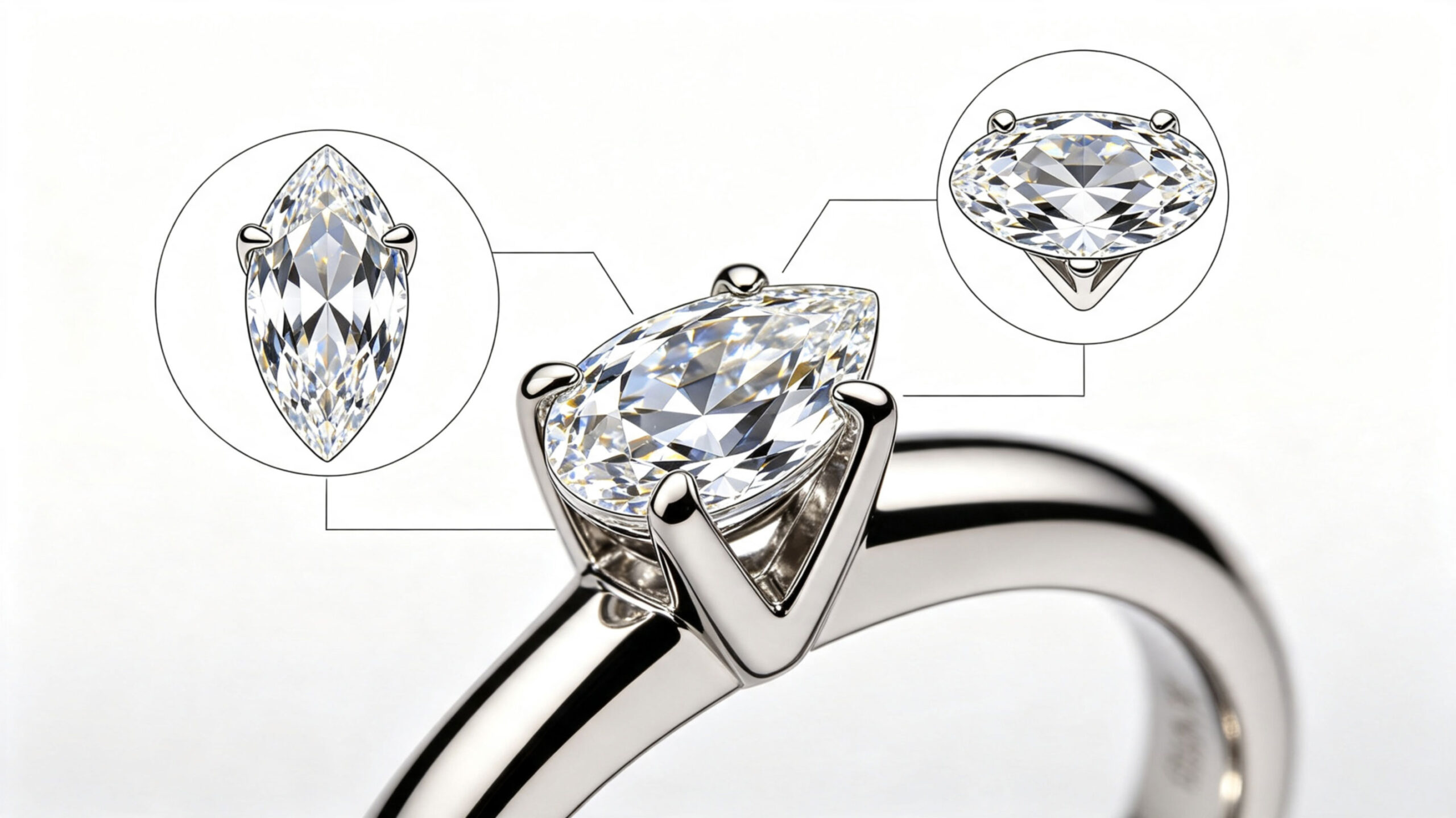
El resultado es un ajuste que protege la punta de los golpes., bloquea el diamante para que no pueda girar ni deslizarse, y mantiene la piedra baja y elegante para que destaque la silueta alargada.
Por qué los cortes puntiagudos necesitan una punta en V
Los diamantes marquesa y pera son apreciados por cómo hacen que el dedo parezca más largo y delgado. Pero ese mismo tiempo, La geometría puntiaguda crea verdaderos desafíos de ingeniería..
La punta de una talla marquesa o pera es una fina punta de cristal.. Bajo el uso diario se encuentra con las puertas., mesas, y bolsos. Con punta redonda estándar, Parte de ese punto puede quedar expuesta sobre el metal., que es exactamente donde ocurren los chips. A Diamante cultivado en laboratorio con engaste de puntas en V El montaje elimina ese riesgo porque el metal de la punta se eleva para encontrarse con la punta desde ambos lados., para que la punta nunca sobresalga sin protección.
Esto es especialmente cierto para diamantes cultivados en laboratorio. Porque los diamantes cultivados en laboratorio y extraídos tienen idéntica dureza y durabilidad., una marquesa o una pera cultivadas en laboratorio son igualmente propensas a sufrir daños en las puntas, y tan merecedor de una punta en V protectora.
Puntas en V, Recuento de puntas, y seguridad
¿Cuántas puntas necesita tu configuración?? Depende de la forma.
- corte marquesa: Generalmente 6 puntas; dos puntas en V que cubren ambas puntas y cuatro puntas laterales (dos por borde largo). Algunos diseños utilizan 4 (dos puntas en V más dos puntas laterales) para una apariencia más limpia.
- corte de pera: Generalmente 5 a 6 puntas; una punta en V en la punta, más cuatro o cinco alrededor de la faja redondeada.
Más puntas significan más seguridad, pero demasiados pueden estorbar una piedra pequeña. El equilibrio entre estética y seguridad es exactamente lo que logra un joyero experimentado cuando el engaste se realiza a mano..
Una preocupación común es que una punta en V haga que el diamante parezca “cubierto.” Una punta en V hábilmente hecha es delgada y ordenada; se lee como una línea de metal limpia en la punta, no es una gorra voluminosa. bien hecho, Incluso puede reflejar el contorno de la piedra y hacer que el corte parezca más refinado..
Colocación de un diamante puntiagudo cultivado en laboratorio: Lo que el creador hace bien
La calidad de un Diamante cultivado en laboratorio con engaste de puntas en V El monte vive en los detalles de fabricación.. Estos son los puntos de artesanía que más importan:
- Grosor del metal en la punta.. La punta en V debe ser lo suficientemente gruesa como para mantener la punta bajo presión, pero lo suficientemente delgada para que parezca delicada.. Demasiado delgado y se doblará; demasiado grueso y cubre la piedra.
- Punto de contacto perfecto. El “V” debe llegar a la faja exactamente en la punta, distribuir la tensión de manera uniforme en lugar de presionar en un solo punto.
- Pulido, bordes redondeados. Los bordes ásperos se enganchan en suéteres y telas.. Un acabado suave protege tanto al usuario como al diamante..
- Alineación equilibrada de las puntas. para una marquesa, ambas puntas en V deben quedar en línea recta con el eje largo, o la piedra se verá torcida.
Antes de que un anillo te alcance, Una fábrica de buena reputación inspecciona cada punta para detectar estos defectos.. Nuestro proceso de control de calidad detecta problemas antes del envío.; lea cómo una fábrica detecta defectos de configuración antes del envío para ver cómo es un control exhaustivo.
Punta V vs.. Otras configuraciones para cortes puntiagudos
Las puntas en V son la opción ideal para piedras de marquesa y pera., pero no son la única opción. Así es como se comparan:
| Configuración | Mejor para | Protección de punta |
|---|---|---|
| punta en V | Marquesa, pera | Excelente; la punta está completamente apoyada |
| Punta redonda estándar | Redondo, almohadón, radiante | Débil en puntas puntiagudas |
| Bisel | Cada día, ropa deportiva | Excelente; envolvente de metal completo |
| Ajuste de tensión | Moderno, minimalista | Moderado; requiere metal grueso |
Si amas lo limpio, aspecto expuesto de una montura moderna, a Diamante cultivado en laboratorio de ajuste de tensión puede ser impresionante, pero para una marquesa puntiaguda o una pera, una punta en V generalmente ofrece una mejor protección sin sacrificar el diseño abierto.. Para una más ágil, alternativa protectora, a diamante cultivado en laboratorio con engaste al ras vale la pena considerarlo para uso de bajo perfil.
Elegir el metal adecuado para su punta en V
El metal que elijas afecta tanto la resistencia como el color.. para una delgada, punta en V protectora, Los metales más duros mantienen mejor su forma.:
- Platino es el más fuerte y duradero, y su acabado blanco combina maravillosamente con un diamante incoloro cultivado en laboratorio.. Resiste la flexión, para que una punta en V de platino permanezca segura durante décadas. Desglosamos las compensaciones en nuestra guía para platino frente a oro blanco de 18 quilates para engastes de diamantes cultivados en laboratorio.
- 18K oro blanco es mas suave, alternativa más cálida.
- 14k oro Ofrece más resistencia que 18K y al mismo tiempo mantiene un aspecto brillante., que puede ser una opción inteligente para una piedra puntiaguda de uso diario. Para una comparación completa de opciones de metal, consulte nuestra guía sobre 14Oro K vs oro de 18 quilates para anillos de compromiso.
La conclusión
Si su corazón está engastado en un diamante cultivado en laboratorio de talla marquesa o pera, a ajuste de punta en v es la forma más segura y elegante de llevarlo. el protector “V” acuna la delicada punta, previene astillas, y mantiene el diamante bloqueado de forma segura en su lugar, todo mientras deja brillar la silueta alargada.
antes de comprometerte, trabajar con un fabricante que entienda las piedras puntiagudas. El equilibrio adecuado entre el número de puntas, dureza del metal, y una fabricación cuidadosa marca la diferencia. cuando estés listo, empezar con un fabricante confiable de diamantes cultivados en laboratorio y pregunte para ver cómo se fabrican y prueban sus puntas en V.