La elección del metal para un anillo de compromiso de diamantes cultivados en laboratorio a menudo se reduce a dos opciones de color blanco.: platino y oro blanco de 18 quilates. Se ven casi idénticos en una fotografía., ambos enmarcan bellamente una piedra incolora, y ambas son opciones premium que durarán más que una generación.. Pero detrás de esa superficie similar se esconde una diferencia real: la durabilidad., en mantenimiento, en costo, y, para un número creciente de compradores, en reacción de la piel. Para cualquiera que pregunte si un alergia al níquel platino vs montura de oro blanco es la forma correcta de elegir, La respuesta tiene más matices de lo que sugieren los metales..
Ni el platino ni el oro blanco son objetivamente “mejor.” La elección correcta depende de tu estilo de vida., tu presupuesto, y, fundamentalmente, la química de tu piel. Esta guía desglosa cómo se fabrican los dos metales., cómo se comportan durante años de uso diario, y por qué la alergia al metal debería ser una de las primeras preguntas que se haga antes de comprar.
Por qué una alergia al níquel cambia la decisión
La principal razón por la que alergia al níquel platino vs montura de oro blanco la comparación importa es el níquel. El níquel es el metal que más comúnmente se añade al oro para endurecerlo y, en el caso del oro blanco, para cambiar su tono amarillo natural hacia el blanco. También es uno de los alérgenos de contacto con metales más comunes en el mundo.. Millones de personas experimentan enrojecimiento, picor, hinchazón, o descamación donde el níquel toca la piel, y los anillos, que se usan contra el dedo durante horas todos los días, se encuentran entre las fuentes más frecuentes de reacción..
Platino, por el contrario, es naturalmente blanco y naturalmente duro. No requiere níquel ni ningún otro metal de aleación para lograr su color., y las joyas de platino de alta pureza suelen ser 90% a 95% platino puro con el resto compuesto de iridio, rutenio, o cobalto, ninguno de los cuales son alérgenos de contacto comunes. Para cualquier persona con piel sensible o alergia confirmada al níquel., Esto hace que el platino sea la opción más segura por un amplio margen.. Si alguna vez has reaccionado a unos pendientes baratos, hebillas de cinturón, o un reloj atrás, Esta es una fuerte señal de que un anillo de oro blanco que contiene níquel puede causar el mismo problema en su dedo..
dicho eso, No todo el oro blanco contiene níquel.. El moderno oro blanco de 18 quilates se alea cada vez más con paladio, que es hipoalergénico y produce un blanco más limpio. Si te encanta el aspecto y el presupuesto del oro blanco pero te preocupa el níquel, La solución práctica es especificar una aleación de oro blanco a base de paladio y confirmarlo por escrito con su joyero., porque es mucho más probable que un anillo de oro blanco estándar contenga níquel que no.
Cómo se fabrican el platino y el oro blanco de 18 quilates
La diferencia de composición explica muchas cosas.. El platino es denso., metal noble que es naturalmente blanco y no se empaña. Un engaste de platino está hecho de aproximadamente 95% platino (a menudo marcado PT950), lo que significa que el metal en sí es la estrella: no hay revestimiento que se desgaste ni color base oculto debajo. es mas pesado que el oro, lo que le da a un anillo de platino una sensación tranquilizadora, peso sustancial que muchos compradores describen como sentirse más “permanente.”
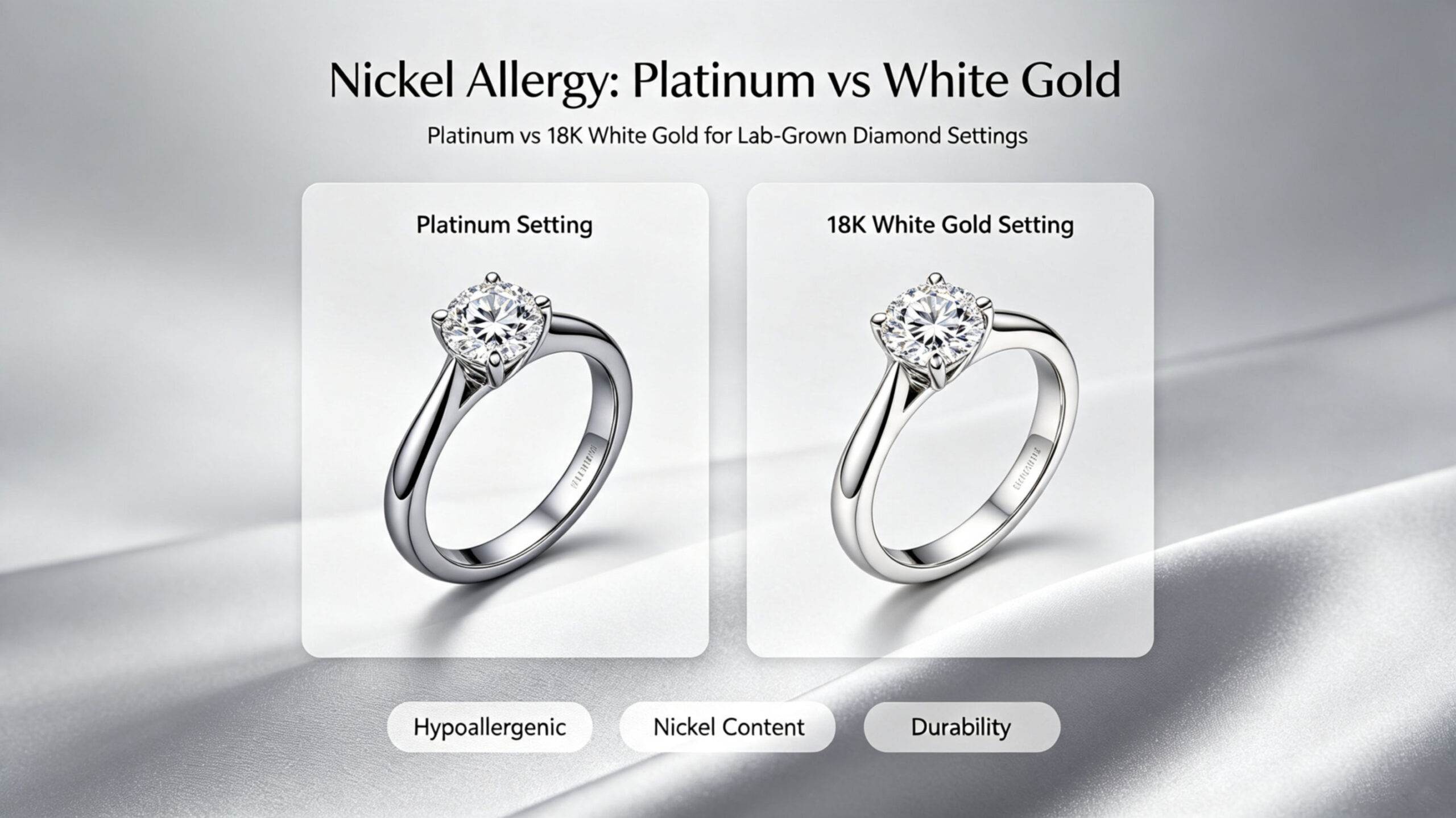
18K oro blanco es 75% Oro aleado con otros metales para crear el color blanco.. Porque el oro es naturalmente amarillo., El oro blanco resultante tiene una ligera calidez que los fabricantes corrigen con una fina capa de baño de rodio en el exterior.. Esta capa de rodio es lo que le da a un nuevo anillo de oro blanco su brillo., Acabado blanco espejo, y es la capa que se desgasta con el tiempo., exponiendo un tono ligeramente más cálido debajo que luego necesita ser rechapado para que luzca nuevo nuevamente.
Ese único hecho: baño de rodio sobre oro blanco, versus metal sólido sobre platino: impulsa la mayoría de las diferencias prácticas entre los dos. Comprenderlo es la base de cualquier persona honesta. alergia al níquel platino vs montura de oro blanco comparación.
Durabilidad: Dureza vs Densidad
Cuando la gente compara la durabilidad, A menudo asumen que el platino es más fuerte porque es más caro.. En realidad, 18El oro blanco K es más duro que el platino en su forma cotidiana. El oro blanco es un producto endurecido por el trabajo., Metal aleado que resiste los rayones y mantiene su forma extremadamente bien durante años de uso.. El platino es más blando y maleable., lo que significa que desarrollará rayones finos, abolladuras, y una pátina suave con el uso diario..
Eso suena como un punto para el oro blanco, hasta que comprendas la compensación.. Cuando se raya un anillo, el oro pierde material: El rasguño literalmente está desgastando el metal.. Platino, siendo más denso y maleable, no pierde material de la misma manera. Sus rayones comprimen la superficie., y el metal se puede pulir repetidamente hasta obtener un acabado suave sin adelgazarse. Por eso el platino se describe como “vistiendo en” en vez de “desgastando.”
Para un anillo de compromiso de diamantes cultivados en laboratorio usado todos los días durante décadas, esta diferencia importa. Un ajuste de platino desarrollará una suave, pátina satinada que muchos coleccionistas prefieren, y se puede pulir una y otra vez sin pérdida estructural. Un engaste de oro blanco permanece más afilado por más tiempo entre pulidos, pero gradualmente pierde una pequeña cantidad de metal cada vez que se vuelve a trabajar, y sus puntas., ¿Cuáles son los puntos de contacto críticos que sostienen el diamante?, se vuelven ligeramente más débiles con cada actualización. Para asegurar una piedra valiosa, el comportamiento en punta de ambos metales exige una inspección periódica, ¿Cuál es exactamente el tipo de control que requiere un riguroso proceso de control de calidad de configuración de fábrica está construido alrededor.
Mantenimiento y la cuestión del rodio
Los programas de mantenimiento de los dos metales son sorprendentemente diferentes.. Un anillo de platino esencialmente requiere pulido para restaurar su acabado., que la mayoría de los joyeros recomiendan cada pocos años dependiendo del uso. Un anillo de oro blanco requiere un nuevo baño de rodio, un proceso que restaura la capa blanca brillante que se ha desgastado.. Porque el enchapado es un tratamiento superficial, Se desgasta más rápido que el propio metal., y muchos anillos de oro blanco necesitan ser rechapados cada uno o dos años con el uso diario normal..
Este es un costo continuo genuino y un inconveniente recurrente para los propietarios de oro blanco.. Cada cambio de placa implica un viaje al joyero y una tarifa., y el ciclo nunca se detiene realmente. Algunos propietarios prefieren el modelo un poco más cálido., apariencia más suave del oro blanco sin baño y elija dejar que el rodio se desvanezca naturalmente, pero esa apariencia no es la que la mayoría de la gente imagina cuando piden un “blanco” anillo de oro. Si desea un metal que luzca idéntico durante décadas con sólo un pulido ocasional, Platinum gana en esfuerzo de mantenimiento.
También hay una segunda capa en la historia del mantenimiento del oro blanco.: el proceso de recubrimiento en sí utiliza rodio, que no está relacionado con el níquel, pero la aleación subyacente es lo que importa para el contacto con la piel.. A medida que el rodio se desgasta, Una mayor parte del oro blanco base, y el níquel que contiene, entra en contacto directo con el dedo.. Para usuarios sensibles al níquel, Esto significa precisamente lo que hace que un anillo de oro blanco sea más seguro cuando es nuevo. (una nueva capa de rodio) puede convertirse en un problema con el tiempo. Este es el quid de la alergia al níquel platino vs montura de oro blanco compensación para pieles sensibles.
Peso, Sentir, y comodidad diaria
El platino es aproximadamente 60% más denso que el oro, lo que hace que un anillo de platino sea notablemente más pesado en el dedo. A algunos usuarios les encanta esto: se siente sólido., caro, y “real.” Otros encuentran cansado un anillo pesado o prefieren el más ligero., sensación menos intrusiva del oro blanco, especialmente para los más grandes, engastes más elaborados o para usuarios no acostumbrados a los anillos. No hay una respuesta correcta; se trata enteramente de comodidad personal.
La densidad también influye en el diseño mismo.. Porque el platino es más denso y maleable, un joyero puede hacer más delicado, Engastes intrincados en platino sin sacrificar la resistencia: el metal contiene detalles finos como milgrain., filigrana, y la galería delgada funciona maravillosamente. El oro blanco es más duro pero menos denso., Por lo tanto, se tiende a realizar trabajos muy finos en platino cuando se requiere un alto nivel de detalle.. Para un adornado, diseñado a medida anillo de diamantes cultivados en laboratorio hecho a pedido, El platino suele ser el lienzo preferido para detalles complejos..
La diferencia de costos
El platino es significativamente más caro que el oro blanco de 18 quilates, a menudo 40% a 60% más alto para un entorno comparable. Parte de esto es el precio del metal en bruto., Y en parte es que la densidad del platino significa que se utiliza más metal por peso en el mismo entorno físico.. Para un comprador preocupado por su presupuesto, El oro blanco ofrece un resultado visual muy similar por mucho menos..
Sin embargo, El costo de por vida no es simplemente el precio de compra.. Agregue el gasto recurrente de rechapado de oro blanco, Tenga en cuenta que el mayor peso del platino hace que la brecha de precios inicial parezca mayor que la que existe por gramo de metal., y la diferencia a largo plazo se estrecha. Si planea conservar el anillo de por vida y nunca cambiar su tamaño ni volver a colocarlo, La prima única del platino a menudo termina siendo el mejor valor.. Si prefiere un anillo más ligero y se siente cómodo con el cambio periódico de placas, El oro blanco es la forma más económica de conseguir el mismo aspecto de diamante blanco..
¿Cuál deberías elegir??
Si tienes piel sensible, una alergia conocida al níquel, o cualquier historial de reacciones metálicas., la recomendación más segura es el platino. Es naturalmente blanco, La composición sin níquel elimina el riesgo por completo y elimina la posibilidad de que el revestimiento desgastado exponga eventualmente una aleación reactiva contra el dedo.. Para compradores propensos a las alergias, Esta tranquilidad vale el precio más alto., y el alergia al níquel platino vs montura de oro blanco La cuestión se resuelve decisivamente a favor del platino..
Si no tienes sensibilidades en la piel., la elección se convierte en una cuestión de estilo y presupuesto. Elija oro blanco de 18 quilates para un encendedor, anillo más asequible que comienza brillante y nítido, aceptar que será necesario volver a revestirlo a lo largo de los años. Elija platino para un peso más pesado., más denso, Metal de bajo mantenimiento que desarrolla una pátina suave., cuesta más por adelantado, y es esencialmente el mismo metal hoy que lo será dentro de treinta años.. Y si desea específicamente un aspecto de oro blanco pero le preocupa el níquel, Insistir en una aleación a base de paladio en lugar de oro blanco estándar: es lo mejor de ambos mundos para las personas alérgicas..
Cualquier metal que elijas, El engaste que sostiene el diamante cultivado en laboratorio merece la misma atención cuidadosa que la piedra misma.. La elección entre platino y oro blanco, en última instancia, depende de tu piel., tu presupuesto, y su tolerancia al mantenimiento, y cualquier joyero acreditado estará encantado de guiarle a través de ambos. Para obtener más información sobre lo que implica un anillo de compromiso fabricado e inspeccionado correctamente, ver cómo la misma atención se extiende a la proceso de fundición y fraguado detrás de cada pieza terminada.