Kiểu đính kim cương bạn chọn quyết định nhiều hơn vẻ ngoài của chiếc nhẫn. Cài đặt phù hợp sẽ bảo vệ đá, cho thấy nó rực rỡ nhất, và chịu được nhiều năm mặc hàng ngày; người sai có thể để lộ một viên kim cương đẹp, không ổn định, hoặc đơn giản là ẩn. Điều quan trọng là phải kết hợp các kiểu đính kim cương với hình cắt của đá - hình tròn rực rỡ và hình quả lê có những nhu cầu rất khác nhau. Hướng dẫn này đi qua các kiểu cài đặt kim cương chính và giải thích cách cắt nào phù hợp nhất với từng kiểu cắt.
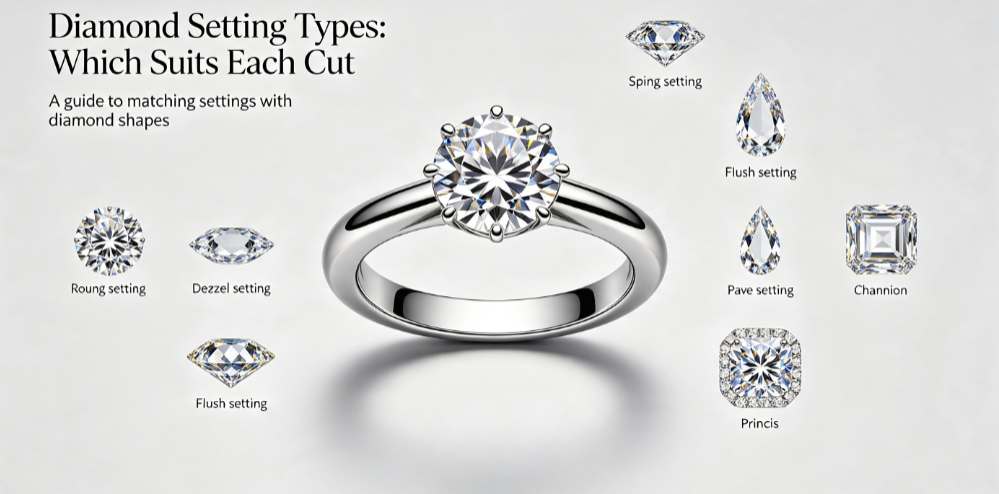
Các kiểu thiết lập kim cương chính
Trước khi khớp các vết cắt, nó giúp để biết các cầu thủ. Đây là những kiểu đính kim cương phổ biến nhất mà bạn sẽ gặp khi mua nhẫn:
Cài đặt ngạnh. Viên kim cương được giữ bởi hàng loạt móng vuốt kim loại, thường là bốn hoặc sáu, nắm chặt hòn đá quanh vành đai của nó. Đây là phong cách phổ biến nhất vì nó cho phép ánh sáng tối đa chiếu tới viên kim cương.
Cài đặt khung bezel. Một vành kim loại bao bọc hoàn toàn xung quanh mép đá. Nó cung cấp sự bảo vệ tuyệt vời và kiểu dáng đẹp, cái nhìn hiện đại.
Cài đặt xả. Viên kim cương được đặt vào một lỗ khoan sao cho bàn của nó nằm ngang với bề mặt kim loại. Phổ biến cho các ban nhạc và thiết kế cấu hình thấp.
Cài đặt kênh. Những viên kim cương được xếp thành hàng giữa hai bức tường kim loại, không có ngạnh giữa những viên đá. Một sự yêu thích cho ban nhạc vĩnh cửu và đám cưới.
Cài đặt pad. Những viên kim cương nhỏ được đính chặt chẽ với nhau bằng những hạt kim loại nhỏ, tạo ra bề mặt lấp lánh liên tục.
Cài đặt độ căng. Viên kim cương bị giữ chặt bởi áp lực giống như lò xo của chính dây đeo, không có ngạnh hoặc bezel có thể nhìn thấy.
Mỗi kiểu đính kim cương này đều có thế mạnh riêng, và mỗi cặp tốt hơn với những vết cắt nhất định so với những vết cắt khác.
Rực rỡ: Đường cắt linh hoạt nhất
Hình tròn rực rỡ là kiểu cắt kim cương phổ biến nhất trên thế giới, và nó cũng là thứ dễ tha thứ nhất khi nói đến các kiểu đính kim cương. Đường viền đối xứng và hình dạng không có góc cạnh của nó có nghĩa là hầu hết mọi cài đặt đều hoạt động tốt.
Một trò chơi bài sáu nhánh là sự lựa chọn cổ điển, vừa sang trọng vừa an toàn — các ngạnh bổ sung bảo vệ đai tròn khỏi bị va đập. Một bốn nhánh phiên bản tối giản hơn và thể hiện nhiều đá hơn, với chi phí bảo vệ ít hơn một chút. Dành cho người mua muốn bảo mật tối đa, Một khung viền xung quanh một vòng tròn rực rỡ mang lại vẻ hiện đại với khả năng bảo vệ vượt trội.
Bởi vì cắt tròn rất linh hoạt, quyết định thường phụ thuộc vào phong cách hơn là sự cần thiết - đó là lý do tại sao nó vẫn là lựa chọn đầu tiên an toàn nhất cho nhẫn đính hôn.
công chúa cắt: Bảo vệ là tất cả
Kiểu cắt công chúa là hình vuông hoặc hình chữ nhật rực rỡ với bốn góc nhọn — và những góc đó là lỗ hổng lớn nhất của nó. Cài đặt ngạnh tiêu chuẩn để lộ các góc, và một cú va chạm có thể làm chúng sứt mẻ.
Đối với đá cắt kiểu công chúa, kiểu đính kim cương tốt nhất là kiểu che chắn các góc:
- Một Cài đặt chữ V, trong đó các ngạnh ở mỗi góc có hình chữ V để quấn quanh các điểm nhọn
- Một cài đặt bezel, bao phủ toàn bộ cạnh bao gồm cả các góc
- Một cài đặt kênh cho công chúa đá liên tiếp
Nguyên tắc chung là đơn giản: nếu cài đặt không bảo vệ các góc, đó là sự lựa chọn sai lầm cho kiểu tóc công chúa. Đây là một trong những ví dụ rõ ràng nhất về lý do tại sao việc kết hợp các kiểu đính kim cương với vết cắt lại quan trọng.
Cắt ngọc lục bảo và Asscher: Thể hiện các khía cạnh bước
Những vết cắt màu ngọc lục bảo và asscher là những hình dạng cắt theo bậc với chiều dài, các mặt mở và các góc được cắt bớt. Họ được đánh giá cao vì sự thanh lịch của họ “hội trường gương” tác dụng, nhưng bàn lớn và vương miện mở của chúng có nghĩa là các tạp chất rất dễ nhìn thấy - và các mặt bậc của chúng ít cho phép có tỷ lệ xấu hơn.
Đối với những vết cắt này, cài đặt tốt nhất là những cài đặt giữ đá cao và không bị cản trở:
- Một thiết lập bốn hướng với đáng kể, ngạnh thẳng ở các góc
- Một cài đặt bezel cho hiện đại hơn, cái nhìn được bảo vệ
- Cài đặt kênh khi nhiều viên đá cắt theo bậc được sử dụng trên một đường
Các góc được cắt bớt của các vết cắt màu ngọc lục bảo và asscher thực sự khiến chúng dễ bảo vệ hơn so với các vết cắt kiểu công chúa - một ngạnh góc được đặt đúng vị trí sẽ nằm tự nhiên trên góc cắt. Vẫn, các mặt mở rộng xứng đáng được bố trí không làm chúng bị che khuất bởi kim loại.
Cắt đệm: Một tác phẩm cổ điển tỏa sáng trong nhiều bối cảnh
Đường cắt đệm là hình vuông bo tròn với các góc mềm mại và các cạnh lớn tạo cảm giác ấm áp, lấp lánh lãng mạn. Nó kết hợp đẹp mắt với hầu hết mọi phong cách thiết lập, điều này làm cho nó được yêu thích cho các thiết kế tùy chỉnh.
Những chiếc đệm trông thật ấn tượng trong một thiết lập hào quang, trong đó một chiếc nhẫn kim cương nhỏ hơn tạo khung cho viên đá trung tâm và nâng cao kích thước cảm nhận của nó. Chúng cũng hoạt động tốt trong cài đặt ngạnh với các ngạnh dày hơn một chút tạo nên những đường cong mềm mại của đá, hoặc trong một khung viền để có một cái nhìn cổ điển-hiện đại sạch sẽ.
Vì vết cắt đệm hiếm khi có điểm nhọn để bảo vệ, sự lựa chọn phụ thuộc vào giao diện bạn muốn - một quyết định rất phù hợp với cuộc trò chuyện cài đặt tùy chỉnh.
Cắt Marquise và lê: Thử thách đầu nhọn
Các vết cắt của Marquise và lê có đầu nhọn đó là phần dễ vỡ nhất của bất kỳ viên kim cương nào. Mẹo đó là nơi chip xảy ra, và đó chính xác là nơi mà nhiều cài đặt tiêu chuẩn không thể giúp được.
Đầu nhọn cần được bảo vệ chuyên dụng, đó là lý do tại sao một Thiết lập rãnh chữ V cho kim cương được trồng trong phòng thí nghiệm bằng quả lê và quả lê là giải pháp phù hợp — ngạnh hình chữ V quấn quanh đầu nhọn thay vì để nó lộ ra ngoài. Cài đặt khung bezel là lựa chọn an toàn khác, che phủ hoàn toàn phần đầu.
Đây là một trong những lập luận mạnh mẽ nhất để hiểu các loại kim cương trước khi mua.: cùng một viên đá đẹp có thể được bảo vệ tốt hoặc tránh bị hư hại, phụ thuộc hoàn toàn vào cài đặt.
Vết cắt hình bầu dục và rạng rỡ: Cân bằng và tha thứ
Những vết cắt hình bầu dục và rạng rỡ nằm giữa các thái cực. Hình bầu dục không có góc nhọn, vì vậy họ chấp nhận hầu hết các cài đặt, mặc dù một sáu ngạnh hoặc bố trí ngạnh được gia cố nhẹ là khôn ngoan đối với những viên đá lớn hơn. rạng rỡ, giống như những vết cắt của công chúa, có các góc có rãnh chữ V hoặc viền để bảo vệ hoàn toàn.
Độ bền: Loại thiết lập kim cương nào tồn tại lâu nhất?
Ngoài những vết cắt phù hợp, độ bền là yếu tố quan trọng khác trong việc lựa chọn kiểu đính kim cương. Nếu bạn muốn biết phong cách nào phù hợp nhất với trang phục thực tế hàng ngày, hướng dẫn của chúng tôi kim cương nào bền nhất xếp hạng các lựa chọn phổ biến theo mức độ chúng bảo vệ viên đá theo thời gian.
Phiên bản ngắn: cài đặt bezel và tuôn ra mang lại sự bảo vệ tốt nhất vì chúng bao phủ các cạnh của đá; cài đặt ngạnh khoe nhiều viên kim cương hơn nhưng để lộ phần thắt lưng; Và cài đặt pad thêm lấp lánh nhưng mang theo những viên đá nhỏ cần kiểm tra thường xuyên. Sự cân bằng giữa việc trưng bày viên đá và che chắn nó là trọng tâm của mọi quyết định lắp đặt.
So sánh bảo vệ: Flush vs Bezel
Hai trong số các loại thiết lập kim cương tập trung vào khả năng bảo vệ nhất là mặt phẳng và khung bezel., và người mua thường hỏi họ so sánh như thế nào. Vừa giữ đá thấp vừa an toàn, nhưng chúng khác nhau về ngoại hình, hiệu suất ánh sáng, và cảm giác của họ trên ngón tay. So sánh chi tiết của chúng tôi về cài đặt tuôn ra so với cài đặt bezel phân tích chính xác hình dạng của viên đá mà mỗi viên đá sẽ phẳng hơn và vị trí của mỗi viên đá bị thiếu hụt.
Khớp cài đặt với kim loại
Các loại thiết lập kim cương chỉ là một nửa của phương trình - kim loại mà chúng được tạo ra từ các vật chất cũng giống như vậy. Ngạnh mỏng cần kim loại chắc chắn; công việc pavé nặng cần một hợp kim có thể giữ những viên đá nhỏ mà không bị mài mòn. Nếu bạn đang quyết định giữa hợp kim vàng, sự so sánh của chúng tôi 18Vàng K so với 14K so với vàng 9K đối với cài đặt kim cương được trồng trong phòng thí nghiệm bao gồm những khác biệt thực tế về độ cứng và độ bền.
Cài đặt đặt hàng cho vết cắt của riêng bạn
Khi bạn biết kiểu đính kim cương nào phù hợp với vết cắt bạn bán, bước tiếp theo là tìm nguồn cung ứng các giá treo. Nhiều thợ kim hoàn và nhà thiết kế mua cài đặt nhẫn kim cương chỉ từ một nhà máy - giá treo làm sẵn theo đúng kiểu dáng, không có đá - và sau đó tự đính kim cương. Mua giá đỡ theo cách này cho phép bạn tiếp cận mức giá tại nhà máy và chất lượng nhất quán giữa các kiểu dáng.
Nó cũng giúp hiểu cách thức gắn kết thực sự được tạo ra, từ mô hình CAD đến đúc khuôn và kiểm tra lần cuối. Hướng dẫn từng bước của chúng tôi để quá trình thiết lập kim cương đi suốt cả cuộc hành trình, và cái nhìn của chúng tôi về cách một nhà máy phát hiện các lỗi cài đặt trước khi vận chuyển giải thích việc kiểm tra chất lượng để phân biệt thú cưỡi tốt và thú cưỡi xấu.
Giữ cài đặt của bạn ở trạng thái tốt
Tuy nhiên, bạn hãy cẩn thận khi chọn kiểu đính kim cương cho chiếc nhẫn của mình, không có cài đặt nào không cần bảo trì. Các ngạnh bị mòn theo năm tháng sử dụng, và một ngạnh mòn là một hòn đá lỏng lẻo đang chờ xảy ra. Nếu bạn nhận thấy một ngạnh trông mỏng hơn trước đây, hướng dẫn của chúng tôi về độ mòn ngạnh và khi thiết lập kim cương cần phục hồi độ dày ngạnh giải thích các dấu hiệu cảnh báo và cách thực hiện công việc sửa chữa.
Phần kết luận
Các kiểu cài đặt kim cương tốt nhất là những kiểu phù hợp với vết cắt - bảo vệ những điểm yếu nhất của nó, thể hiện những khía cạnh tốt nhất của nó, và phù hợp với cách nó thực sự được mặc. Rực rỡ tròn là linh hoạt nhất, công chúa cắt yêu cầu bảo vệ góc, đá marquise và lê cần có ngạnh chữ V hoặc gờ, và các bước cắt xứng đáng được sạch sẽ, cài đặt không bị cản trở.
Cho dù bạn đang chọn cách cài đặt cho chiếc nhẫn đính hôn của riêng mình hay tìm nguồn cung ứng cho một bộ sưu tập, nguyên tắc là như nhau: hiểu cách cắt đầu tiên, sau đó chọn cài đặt phục vụ nó. Và khi bạn đã sẵn sàng tìm nguồn, một người có kinh nghiệm nhà sản xuất kim cương được trồng trong phòng thí nghiệm có thể giúp bạn kết hợp các kiểu đính kim cương phù hợp với những viên đá phù hợp ngay từ đầu.