Un anillo de compromiso ovalado ha sido la forma de diamante más solicitada durante varios años consecutivos, y por una buena razón. La silueta alargada del óvalo favorece cada dedo, boca arriba más grande que una ronda del mismo peso en quilates, y, cuando eliges un óvalo cultivado en laboratorio, ofrece esa gran apariencia por una fracción del precio de una piedra extraída.. Pero no todo óvalo es un buen óvalo: Las mismas proporciones que hacen que la forma sea hermosa pueden producir un tono oscuro., poco halagador “corbata de moño” a través del centro, y el ajuste o el metal incorrectos pueden opacar el brillo por el que pagaste.
Esta guía explica lo que realmente importa a la hora de comprar un anillo de compromiso ovalado en 2026: cómo detectar una pajarita en mal estado., la relación largo-ancho que mejor se ve en la mano, ¿Qué configuración protege las puntas vulnerables de un óvalo?, y cómo utilizar diamantes cultivados en laboratorio para conseguir un tamaño más grande, mejor piedra para su presupuesto.
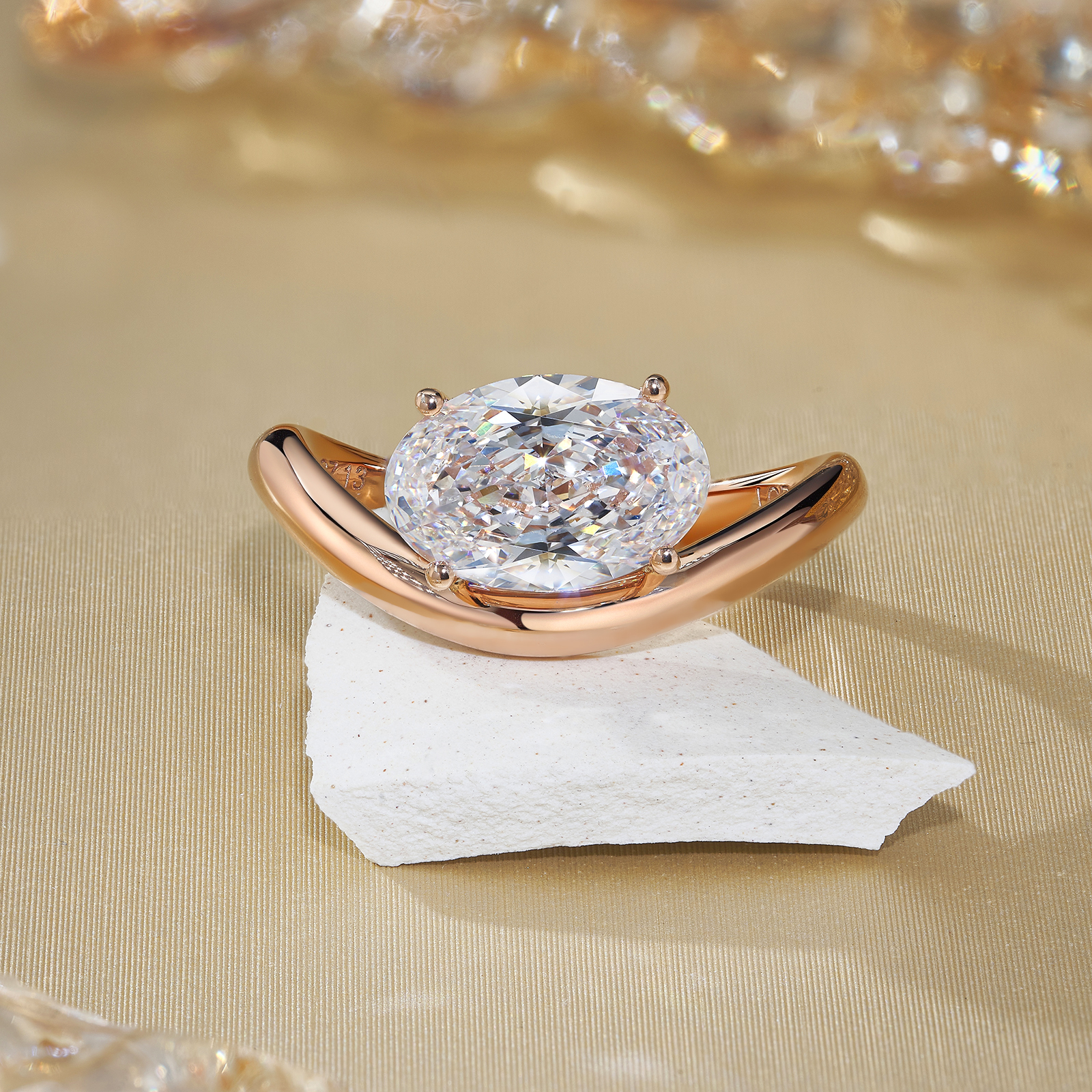
Un anillo de compromiso ovalado creado en laboratorio en oro rosa de 14k: un favorecedor, pareja más vendida.
Por qué el anillo de compromiso ovalado superó a todas las demás formas
El óvalo es un corte brillante, lo que significa que tiene las mismas 57-58 facetas que un brillante redondo, así vuelve la luz con fuego serio. Pero debido a que el contorno es alargado, un óvalo hace dos cosas que una ronda no puede: hace que el dedo parezca más largo y delgado, y distribuye su peso en quilates sobre una superficie más grande para que la piedra aspecto más grande que una bala del mismo peso. Para compradores que trabajan con un presupuesto, especialmente un presupuesto elaborado en laboratorio, donde ya ahorras entre un 50% y un 70% en comparación con lo extraído, eso “boca arriba-grande” La ventaja es la principal razón para elegir el óvalo..
El interés de búsqueda cuenta la misma historia. Google Trends muestra el anillo de compromiso ovalado con aproximadamente el doble de la tasa sostenida de EE.UU.. interés de halo, talla esmeralda, y búsquedas de anillos de compromiso de oro rosa, y “anillo de compromiso ovalado con diamantes cultivados en laboratorio” es uno de los términos relacionados de más rápido crecimiento. Los compradores no solo buscan óvalos, sino que compran específicamente óvalos cultivados en laboratorio..
El único defecto que puede arruinar un óvalo: el efecto pajarita
Cada corte brillante alargado tiene una sombra en el centro por donde la luz se escapa en lugar de rebotar.. En un óvalo, esa sombra parece una oscuridad “corbata de moño.” un pequeño, una pajarita tenue es normal y apenas visible; un grande, oscuro, Uno obvio hace que la piedra parezca sin vida y es el #1 razonar un “barato” ovalado parece barato.
No se puede juzgar la pajarita por un certificado.. Dos óvalos con corte idéntico., color, claridad, y los grados de quilates pueden tener pajaritas completamente diferentes, porque está impulsado por la alineación de las facetas y los ángulos del pabellón, detalles que no aparecen en un informe de laboratorio. La única forma fiable de comprobarlo es con vídeos y fotografías del actual piedra, no es un render. Cuando comparas óvalos cultivados en laboratorio con las mismas especificaciones, Solicite siempre imágenes reales y vea la piedra con diferente iluminación.; aquí es exactamente donde deberías compare diamantes cultivados en laboratorio con las mismas especificaciones uno al lado del otro antes de comprometerse.
Relación largo-ancho: Alargado vs.. Óvalos gruesos
La apariencia de un óvalo se define por su longitud y ancho. (L/A) relación. La gama clásica es 1.35–1,50:
- 1.30–1,40 - más grueso, casi en forma de almohada; se lee como un toque más vintage.
- 1.41–1,50 — el más popular “elegante alargada” look que favorece a la mayoría de las manos.
- 1.51 y arriba - muy largo y delgado; adelgazar, pero puede leer fino y tiende a mostrar una pajarita más fuerte.
no hay un solo “mejor” proporción: solo lo que se adapta a la mano y al gusto del usuario. Un 1,45-1,50 L/W es el que deleitará al público de forma segura. Si no está seguro de cómo se leerá una forma alargada en una mano más pequeña, nuestra guía para el La mejor forma de diamante para manos pequeñas. recorre las proporciones que parecen equilibradas en lugar de abrumadoras.
Por qué un óvalo es más grande (y lo que eso significa para su presupuesto)
Un óvalo de 1,5 quilates suele tener un área boca arriba más grande que una ronda de 1,5 quilates., porque el óvalo distribuye su peso a lo largo en lugar de hacerlo en profundidad. Prácticamente, eso significa que puede bajar a un peso en quilates ligeramente menor y seguir obteniendo la misma cobertura para los dedos, o mantener el peso y disfrutar de una apariencia notablemente más grande por el dinero.
Combine esa geometría con precios desarrollados en laboratorio y el valor se multiplica. Si su objetivo es un aspecto específico, digamos, un óvalo de 2 quilates: ayuda a comprender exactamente lo que pagan los compradores en el mercado actual; nuestro desglose de 2 precios de anillos de diamantes cultivados en laboratorio en quilates en 2026 Muestra dónde va el dinero y dónde no.. la regla general: gastar primero en calidad de corte y relación L/W, luego, estire el peso en quilates con el ahorro que le brinda el cultivo en laboratorio.. Por un marco para esa compensación, consulte nuestra guía para elegir el El mejor tamaño de diamante cultivado en laboratorio para su presupuesto..
Elija la configuración adecuada para un óvalo
El engaste hace más que sujetar la piedra: protege las dos puntas puntiagudas del óvalo. (la parte más propensa a astillarse de la forma) y da forma a cómo el anillo se fotografía y se usa.
Solitario
un cuatro- o el solitario de seis puntas muestra el contorno completo del óvalo y es la opción más atemporal. Seis puntas son más seguras para las puntas.; cuatro puntas son más limpias pero dejan los puntos más expuestos. Un solitario también es el estilo más fácil de combinar con casi cualquier alianza de boda más adelante..
Bisel
Un bisel total o parcial envuelve metal alrededor del borde del óvalo, protegiendo las puntas por completo, ideal para un usuario activo. La desventaja es que un bisel cubre más piedra y puede hacer que se lea un poco más pequeña.. Nuestra comparación de bisel vs.. anillos de compromiso solitarios expone en detalle la relación entre durabilidad y brillo.
Halo oculto
Un halo oculto se encuentra debajo de la piedra central., agregar un anillo de diamantes decorativos que realza el brillo general y hace que el óvalo parezca un poco más grande desde un lado, sin cambiar la silueta de arriba hacia abajo. Es una de las mejoras más populares en un óvalo creado en laboratorio.; consulte nuestra guía de anillo de compromiso de diamantes cultivados en laboratorio con halo oculto para los profesionales, contras, y que comprobar.
Pavimentar y Catedral
Pavé adorna la banda con pequeños diamantes decorativos para lograr el máximo brillo general., y un entorno de catedral eleva la piedra central sobre arcos de metal para darle altura y presencia.. Ambos añaden presencia pero también cuestan, y el pavé necesita un poco más de mantenimiento. Si estás pesando una banda pavimentada, nuestro Guía del comprador de anillos de compromiso con pavé cubre las compensaciones entre micro y canal.
Elija el metal adecuado
El color del metal cambia tanto el aspecto del óvalo como la forma en que se lee el color de la carrocería.:
- Platino y oro blanco. - la combinación más segura para un casi incoloro (D-G) oval; El metal blanco refleja la luz a través de la piedra y oculta una leve calidez..
- oro amarillo — cálido y clásico; puede hacer un color más bajo (H-J) aspecto ovalado intencionalmente vintage en lugar de “cálido,” porque el tono del metal se funde con la piedra.
- oro rosa - la elección romántica, y una combinación particularmente favorecedora para un óvalo cultivado en laboratorio. La calidez rosada del oro rosa suaviza el color del cuerpo de la piedra y complementa la mayoría de los tonos de piel., y es exactamente por eso que los engastes ovalados de oro rosa como el que se muestra arriba siguen siendo los más vendidos.
Cualquier metal que elijas, decidir deliberadamente la pureza de los quilates. 14K es más duro y resistente a los arañazos para el uso diario.; 18K es más rico en color y más valioso pero más suave.. Nuestro 14k contra. 18anillo de compromiso de oro k La guía reduce la durabilidad., color, y valor a largo plazo para que pueda elegir con confianza.
Consejos de color y claridad específicos para óvalos
Los óvalos se comportan de manera un poco diferente a los redondos en cuanto a color y claridad.:
- El color se concentra en las puntas.. Los extremos puntiagudos de un óvalo muestran el color del cuerpo más rápido que uno redondo, entonces, para una apariencia casi incolora, D – G es la zona segura, y una H o más baja mostrará calidez antes en los puntos, especialmente en metal blanco. (máscara de oro amarillo y rosa). Nuestro explicador sobre DF vs. Color de diamante cultivado en laboratorio G-H te ayuda a decidir dónde gastar.
- Las inclusiones se esconden bien. El brillante patrón facetado enmascara pequeñas inclusiones mejor que un corte escalonado, por lo que normalmente puedes pasar a VS2 o incluso a un SI1 limpio sin que nadie se dé cuenta; es mejor gastar el dinero en corte y talla. Lea nuestra guía en cuando la claridad VS tiene mejor valor que VVS antes de pagar por una calificación que no puedes ver.
- Cortar reglas fijas. “Grado de corte” en un informe de laboratorio está menos estandarizado para los óvalos que para los redondos, así que juzga corta con tus ojos: afilado, facetas simétricas, incluso retorno de luz, y esa mínima pajarita. Nuestro mejor grado de corte para diamantes cultivados en laboratorio La guía explica qué verificar realmente..
Combinar una alianza de boda con un óvalo
Porque un óvalo se encuentra a lo largo del dedo., puede crear un pequeño espacio con una alianza de boda recta, lo que no es un problema para algunos compradores y es un factor decisivo para otros.. Curvo (cheurón) alzacuello, bandas con muescas, o un solitario de bajo perfil todos resuelven esto, y muchos compradores simplemente aceptan una ligera brecha. Si desea que la pila parezca intencional en lugar de ocupada, nuestra guía para el La mejor alianza de boda para un anillo de compromiso ovalado. traza las opciones que parecen coherentes.
Ovalado vs.. Otras formas alargadas
Si te encanta el aspecto alargado pero quieres comparar, las alternativas más cercanas son las corte marquesa (apuntado en ambos extremos, longitud máxima del dedo, riesgo de pajarita más fuerte) y el forma de pera (un extremo redondeado, uno puntiagudo, silueta de lágrima). El óvalo es el más indulgente de los tres, menos propenso a una pajarita dura que el marquesa y menos direccional que la pera, razón por la cual sigue siendo la opción alargada más segura para quien compra por primera vez..
Cómo comprar con confianza un óvalo cultivado en laboratorio
Una vez que haya reducido las especificaciones, la última milla es la verificación:
- Insistir en un informe de laboratorio.. IGI es el certificado más común para diamantes cultivados en laboratorio y es ampliamente aceptado.; Existen piedras cultivadas en laboratorio con clasificación GIA, pero son más raras y más caras. Nuestro IGI vs.. GIA para diamantes cultivados en laboratorio La comparación explica cuál tiene sentido para sus objetivos..
- Verificar el informe en línea. Haga coincidir la inscripción láser y el número de serie de la piedra con el registro en línea del laboratorio antes de pagar. Aquí está cómo verificar en línea un certificado de diamante cultivado en laboratorio.
- comprar la piedra, no el papel. Dos “idéntico” Los óvalos pueden verse diferentes en persona, así que compare siempre fotos y videos reales., especialmente para la pajarita.
La conclusión
Un bien elegido anillo de compromiso ovalado te brinda la rara combinación de una silueta favorecedora, una mirada más grande que la vida, y, gracias a un precio desarrollado en laboratorio, que le permite mejorar el corte o los quilates sin tener que estirarse. Consigue las proporciones correctas (una pajarita limpia y una relación L/W cercana 1.45), Protege las puntas con la configuración adecuada., combinar el metal con el color de la piedra, y verificar el certificado. Haga esas cuatro cosas y terminará con un óvalo que parece mucho más caro de lo que es y luce maravillosamente durante décadas..