A lab grown diamond can leave the growth chamber with perfect clarity, but that perfection means nothing if the stone is chipped, tilted, or loose in its setting by the time it reaches the customer’s door. That’s why lab grown diamond setting QC — the quality-control process that happens between the jeweller’s bench and the shipping desk — is the single most important checkpoint in the entire production chain. This is the stage where a factory either protects its reputation or quietly throws it away.
At Wentworth Diamonds, every ring passes through a structured inspection routine before it is approved for dispatch. The process is not a quick glance under a desk lamp. It is a multi-step protocol that combines magnification, measurement, lighting, and documentation, all designed to catch the defects that are invisible to the naked eye. Understanding how this works tells you exactly what separates a reliable manufacturer from one that ships first and apologises later.
Why Setting Defects Are So Easy to Miss
The prongs that hold a lab grown diamond are tiny — often less than a millimetre wide at the contact point. A defect in a prong, a hairline crack in a shoulder, or a stone seated a fraction of a degree off-level will never show up in a casual photograph. Even a jeweller with good eyesight will struggle to see these issues at arm’s length. This is the core problem that lab grown diamond setting QC exists to solve: the gap between what looks fine and what is actually fine.
Compounding the difficulty, many setting defects are introduced not during casting or polishing but during the final setting operation itself. A bench jeweller applying slightly too much pressure with a bezel pusher, a burr left inside a prong that was supposed to be polished out, or a head that was soldered a hair too low — all of these are bench-side errors that only a dedicated inspection step can catch. Factories that skip QC, or treat it as a formality, are the ones whose reviews fill up with phrases like “stone was crooked” and “prong caught on everything.”
Step 1 — Visual Inspection Under Magnification
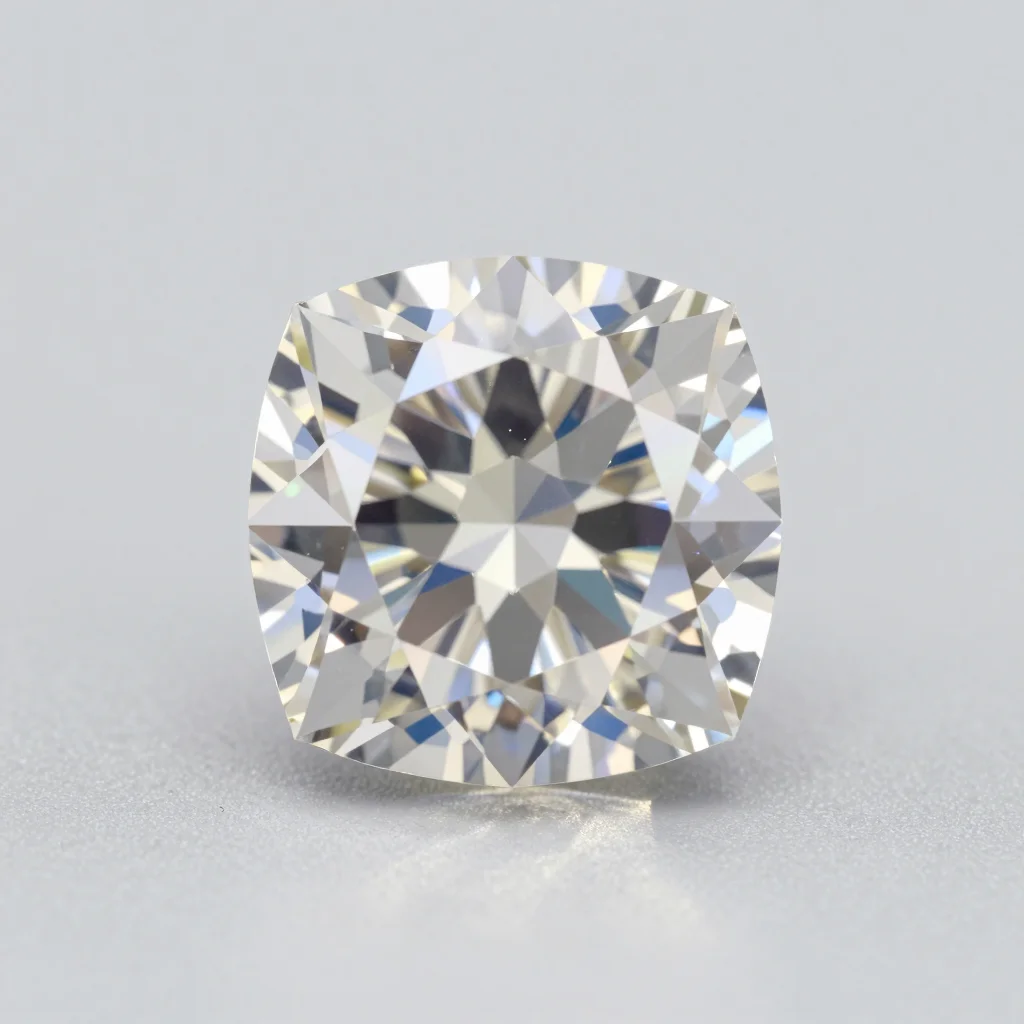
The first checkpoint is a thorough visual inspection using a high-quality jeweller’s loupe or, more commonly, a stereo microscope at 10× to 30× magnification. The inspector is not admiring the ring; they are hunting for specific failure modes. They check each prong for proper contact with the diamond’s girdle, look for bent or burnished-over prong tips, inspect the gallery and bridge for casting remnants or file marks, and confirm that the stone is seated flat with no rocking when light pressure is applied to the table.
This step is where the majority of setting defects are caught. A prong that looks correct to the eye can, under magnification, reveal a thin contact line that means it is barely gripping the stone. A diamond that appears centred may actually be resting on one side of the pavilion, putting asymmetrical stress on two prongs while the other two do almost no work. These are the kinds of faults that turn into “lost stone” complaints months later — and they are exactly what a proper lab grown diamond setting QC routine is built to intercept.
Step 2 — Measurement and Proportion Verification
Magnification catches what the eye misses, but some defects are geometric rather than visual. A head that was cast slightly off-axis will tilt the diamond relative to the shank. A setting height that deviates from the design will throw off the ring’s profile and, on engagement rings with matched bands, create an awkward step where the two rings meet. For these issues, the factory relies on measurement.
Digital callipers, gauge pins, and in some cases optical measurement systems are used to verify that the finished ring matches the intended design within a defined tolerance. The overall finger size is checked, the head height and width are compared to the CAD model, and the distance between matched-band pairs is confirmed. A ring that is visually beautiful but dimensionally off will fail this step and be returned to the bench for correction. This is one of the least glamorous but most decisive stages of lab grown diamond setting QC, because dimensional errors are the ones customers notice the moment they try the ring on alongside another piece.
Step 3 — The Light and Angle Test
After magnification and measurement, the ring goes through a lighting test. This is a deliberately simple but effective procedure: the ring is examined under several different light sources — daylight-balanced, warm tungsten, and a narrow-beam inspection lamp — and rotated through every angle. The purpose is twofold. First, different lighting reveals different surface defects: a polished facet that looks flawless under one light can show faint polishing lines or burnishing under another. Second, the rotation exposes the stone from every direction, which is the only reliable way to confirm that brilliance and fire are consistent and that no prong is shadowing a facet in a way that suggests it was set too deep.
This step also catches one of the most common and most damaging defects: a chip or nick on a diamond’s girdle or culet that was introduced during setting. A chip on the girdle is often invisible face-up but catches light differently when the ring is tilted. A trained inspector rotating the ring under a narrow beam will see a flash of anomaly that points straight to the damage. Catching this before shipping means the factory can reset the stone or replace it, rather than sending out a ring that fails the customer’s own inspection under a bright shop light.
Step 4 — The Documentation and Sign-Off Loop
Inspection only protects quality if it is tied to accountability. At Wentworth Diamonds, every ring that passes QC is accompanied by a record that notes who inspected it, what was checked, and what — if anything — was returned to the bench for correction. Rings that fail are not quietly fixed and pushed through; the defect is logged, the bench jeweller is informed, and the piece re-enters the inspection queue from the beginning after the fix. This loop is what turns lab grown diamond setting QC from a one-time gate into a continuous-improvement process: recurring defect patterns get fed back to the setting and casting teams, and the same error stops appearing in future batches.
The final sign-off is given only when all four checkpoints — magnification, measurement, lighting, and documentation — are clean. A ring that clears all four is released to packing; a ring with any open item is held. There is no “ship it and we’ll deal with it” path. This discipline is the reason a factory can offer a stone warranty with confidence: it knows, from a paper trail, exactly what condition the ring was in when it left the building.
What This Means for the Customer
For the buyer, the practical value of a rigorous lab grown diamond setting QC process is simple and measurable. The ring arrives looking the way the renderings promised, the stone is centred and secure, the prongs are even and finished, and the dimensions match the size ordered. When the customer takes the ring to an independent jeweller for an appraisal or a resize, there are no surprises — no chipped girdle, no tilted head, no prong that a second jeweller would immediately flag. The factory’s QC step, in other words, is what makes the online purchase as low-risk as walking out of a physical boutique with the piece.
It also protects the long-term value of the ring. A diamond that was set correctly the first time is far less likely to need re-tipping, re-setting, or stone replacement down the line. The few extra days a factory spends on inspection are repaid in years of trouble-free wear — and in the absence of the kind of review that makes a future customer hesitate. A factory that documents its QC is, in effect, putting its inspection record behind every ring it ships.
From the Bench to the Box, the Right Way
The path from a finished casting to a ring in a customer’s hand is short, but it is where reputations are won or lost. Lab grown diamond setting QC is the discipline that makes sure they are won. Magnification catches the defects the eye can’t, measurement catches the ones the eye doesn’t think to look for, lighting exposes damage that only shows at certain angles, and documentation turns each inspection into a lasting guarantee. Skip any one of these and the whole process weakens; apply all four and the ring that ships is the ring that was designed.
If you are comparing manufacturers and want to see what a fully inspected, properly documented lab grown diamond ring looks like in person, explore the finished pieces at Wentworth Diamonds and learn how the same QC discipline is applied to wax casting and setting across every piece they produce.
Source From Our Factory
Wholesale Lab Grown Diamond Tennis Bracelet is manufactured in-house at Wentworth Diamonds — request wholesale pricing or custom specifications.