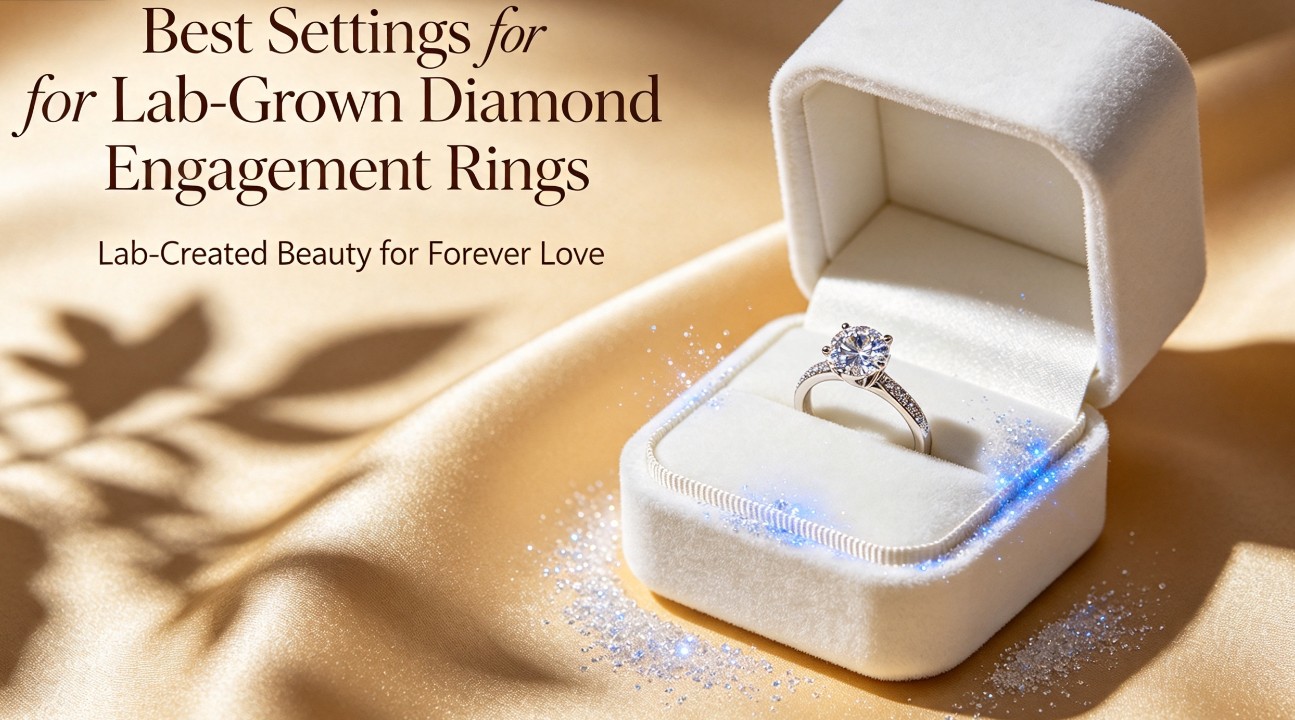
Choosing the best settings for lab grown diamond engagement rings is about more than looks — it is about protecting a stone you will wear every day for the rest of your life. A lab-grown diamond is chemically and physically identical to a mined diamond, which means it deserves exactly the same quality of setting: secure prongs, careful stone protection, and a design that shows off the stone’s brilliance. This guide reviews the best settings for lab grown diamond engagement rings by style, cut, and lifestyle, so you can choose with confidence.
What Makes a Setting “Best” for an Engagement Ring?
Before comparing styles, it helps to define what an engagement ring setting actually needs to do. The best settings for lab grown diamond engagement rings share four qualities:
Security. The diamond must be held firmly enough to survive daily wear, knocks, and decades of use without loosening.
Protection. The setting should shield the most fragile parts of the stone — especially corners and pointed tips — from impact.
Brilliance. The setting should let light reach the diamond and reflect back, not block or crowd the stone.
Comfort and practicality. The ring will be worn every day, so the setting should sit comfortably on the finger and be easy to keep clean.
A setting that scores well on all four counts is a genuinely good choice; a setting that fails on protection, for example, is not saved by being beautiful.
The Classic: Six-Prong Solitaire
The six-prong solitaire is the benchmark against which all other engagement ring settings are judged. Six evenly spaced prongs hold a round brilliant securely while leaving the crown almost completely exposed, which maximizes light return.
Why it is among the best settings for lab grown diamond engagement rings:
- The extra prongs (compared with four) add security for the round girdle
- The simple design keeps the focus entirely on the diamond
- It is easy to clean, resize, and repair
- It suits almost every hand shape and style preference
If you want a ring that will never look dated and never cause surprises, the six-prong solitaire is the safest bet in the entire catalog.
The Minimalist: Four-Prong Solitaire
The four-prong solitaire is the sleek younger sibling of the six-prong. It shows even more of the diamond and gives the ring a lighter, more modern silhouette. Because fewer prongs mean less metal over the stone, a four-prong setting can make a diamond look larger.
Four-prong settings are an excellent choice for round, oval, and cushion cuts. They are not ideal for stones with sharp corners, since a standard four-prong layout leaves those corners exposed. If you prefer a four-prong look for a princess or radiant cut, ask for V-shaped prongs at the corners instead — which brings us to one of the most important rules for choosing settings.
Protection First: Settings for Pointed and Cornered Cuts
Lab-grown diamonds come in every shape, and some shapes need far more protection than others. The two risk groups are:
- Pointed cuts — marquise and pear stones, whose tip can chip on impact
- Cornered cuts — princess and radiant stones, whose sharp corners are vulnerable
For pointed stones, a V-prong setting for marquise and pear lab-grown diamonds wraps the prong around the tip instead of leaving it exposed. For cornered stones, the same V-prong idea at each corner, or a full bezel, provides the protection a standard prong cannot. These choices are often the difference between a stone that lasts decades and one that chips in its first year.
Maximum Safety: Bezel Settings
A bezel setting surrounds the diamond completely with a rim of metal. It is arguably the most protective setting available, and it has become one of the most popular modern choices for engagement rings.
Bezel settings shine when:
- You have an active lifestyle and want maximum stone protection
- You prefer a sleek, contemporary look
- You are setting a stone with corners or a pointed tip
- You want the ring to sit low and catch on nothing
The trade-off is that a bezel covers part of the diamond’s edge, which slightly reduces the amount of light entering from the side. In practice, most wearers never notice the difference — and the peace of mind is worth it. If you are deciding between a bezel and a low-profile alternative, our detailed comparison of flush setting vs bezel setting explains how the two protection-first styles differ.
Maximum Brilliance: Halo Settings
A halo setting surrounds the center stone with a ring of smaller diamonds. It is one of the most flattering settings for lab-grown diamonds, because the surrounding stones bounce light back into the center stone, making it appear larger and more brilliant.
Halos work especially well for:
- Round, cushion, and oval center stones
- Buyers who want maximum sparkle and presence
- Smaller carat weights that benefit from the visual boost
The main consideration with a halo is maintenance: the small halo stones sit in tiny prongs or beads that need occasional inspection and tightening. It is a small price for a ring with real wow factor.
The Storyteller: Three-Stone Settings
A three-stone setting places the center diamond between two side stones, traditionally representing the past, present, and future of the relationship. It is a timeless and meaningful choice, and the side stones add width to the ring.
Three-stone settings work with almost any center cut — round, princess, emerald, and cushion all look natural between a pair of complementary side stones. Just make sure the side stones are matched in quality, and that the setting protects all three stones properly.
Matching the Setting to the Cut
If you are still comparing styles, our guide to diamond setting types walks through how each cut interacts with each setting — which shapes tolerate any style and which ones demand extra protection. It is the quickest way to narrow your options before you visit a jeweler.
The core of that guide applies directly to engagement rings: round brilliants are the most flexible, princess cuts need corner protection, marquise and pear stones need V-prongs or a bezel, and step cuts like emerald deserve clean, unobstructed settings.
Durability: Which Settings Last the Longest?
An engagement ring is a lifetime purchase, so durability deserves its own consideration. Our guide to which diamond setting is most durable ranks the common styles by how well they hold up in daily wear.
In short, bezel and flush settings are the most durable because they protect the stone’s edges completely; solitaires with well-made prongs are close behind when the prongs are properly shaped; and pavé or halo work requires the most regular care because of the small stones involved.
Choosing the Right Metal
The setting’s metal matters as much as its style. Engagement rings are worn every day, so the metal must resist scratching, bending, and wear over the decades. If you are weighing your options, our comparison of 18K vs 14K vs 9K gold for lab-grown diamond settings covers the practical differences in hardness, color, and durability.
Where to Source Your Setting
Once you know which style you want, you have two routes: buy a finished ring, or buy the mount separately and set your own stone. Many jewelers and designers choose to buy diamond ring settings only from a factory — this gives access to a wide catalog of styles at factory pricing, with the freedom to set any lab-grown diamond you choose.
Understanding how a setting is actually made also helps you judge quality when you compare mounts. Our step-by-step guide to the diamond setting process walks through the production journey, and our article on how a factory catches setting defects before shipping explains the quality checks that separate excellent mounts from mediocre ones.
Caring for Your Engagement Ring Setting
No matter which of the best settings for lab grown diamond engagement rings you choose, every setting needs occasional care. Prongs wear down slowly over the years, and a thinned prong can eventually mean a loose stone. If you notice a prong looking thinner than it used to, or the diamond feeling less firm, our guide on prong wear and when a diamond setting needs prong thickness restored explains the warning signs and how repair work is done.
Conclusion
The best settings for lab grown diamond engagement rings combine security, protection, brilliance, and comfort — in a style you will love for a lifetime. The classic six-prong solitaire is the safest all-rounder, four-prong solitaires offer a sleek look, bezels deliver maximum protection, halos maximize sparkle, and three-stone settings tell a story. The right choice depends on your cut, your lifestyle, and your taste.
Whatever you choose, remember that the setting is the guardian of your diamond. Choose it carefully, source it from someone who knows how it is made, and care for it over the years. When you are ready to source the ring or the mount, working with an experienced lab-grown diamond manufacturer ensures the whole piece — stone and setting together — is built to last.