¿Qué es un diamante cultivado en laboratorio de talla esmeralda??
Un diamante cultivado en laboratorio de talla esmeralda es un diamante de talla escalonada con forma rectangular., esquinas biseladas, y una mesa abierta que crea un “salón de espejos” efecto. A diferencia de los cortes brillantes (como oval o corte princesa), la talla esmeralda prioriza la claridad y la elegancia sobre el fuego y el brillo. Debido a que los diamantes cultivados en laboratorio ofrecen las mismas propiedades físicas y ópticas que los diamantes extraídos (a precios entre un 40% y un 70% más bajos), la talla esmeralda se ha convertido en una de las opciones de formas elegantes de más rápido crecimiento para los anillos de compromiso en Estados Unidos. 2026.
¿Por qué elegir un diamante cultivado en laboratorio de talla esmeralda??
La talla esmeralda ofrece tres ventajas que la hacen especialmente atractiva cuando se combina con la tecnología de diamantes cultivados en laboratorio.:
1. Tamaño visual más grande por quilate
Las tallas esmeralda tienen una superficie mayor que los brillantes redondos del mismo peso en quilates.. Un diamante de talla esmeralda de 2 quilates normalmente mira hacia arriba entre un 10% y un 15% más grande que un diamante redondo de 2 quilates.. Desde Precios de diamantes cultivados en laboratorio. escala favorablemente con el tamaño, obtienes un mayor impacto visual por dólar, una razón clave por la que los compradores que eligen piedras más grandes a menudo gravitan hacia este corte.
2. La claridad está a la vista
La mesa abierta y las facetas escalonadas de una talla esmeralda actúan como una ventana a la piedra.. Las inclusiones son mucho más visibles que en las tallas brillantes., lo que significa que debes priorizar grados de claridad de VS2 o superiores. Si no está seguro de qué grado de claridad elegir, nuestra guía sobre la mejor claridad para diamantes cultivados en laboratorio explica cuándo VS ofrece mejor valor que VVS.
3. Eterno, Elegancia discreta
Mientras configuración del pad y diseños de halo oculto maximizar el brillo, el corte esmeralda atrae a los compradores que desean un lujo tranquilo. Sus líneas limpias y su herencia vintage, que se remonta al movimiento Art Déco de la década de 1920, lo convierten en el favorito tanto para entornos de solitario como de tres piedras..
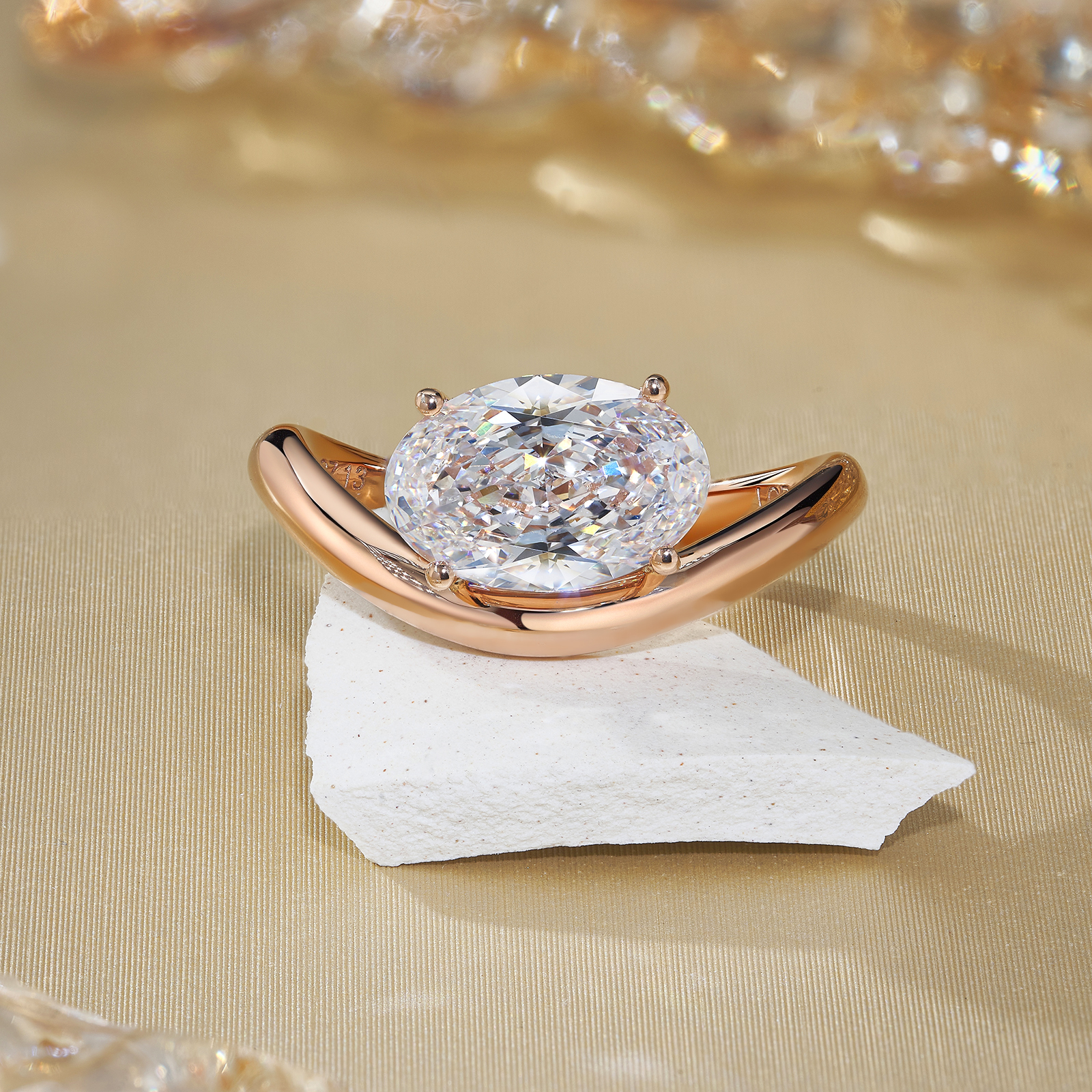
Corte esmeralda frente a otras formas elegantes: ¿Cuál es el adecuado para usted??
Los compradores suelen comparar el corte esmeralda con otras formas elegantes y alargadas.. Así es como se compara:
- Esmeralda vs Ovalada: Cortes ovalados Ofrece más brillo y oculta mejor las inclusiones., pero los cortes esmeralda ofrecen un aspecto más sofisticado., aspecto arquitectónico. Elige un óvalo para brillar; elige esmeralda para la elegancia.
- Esmeralda vs Pera: Formas de pera combine una punta puntiaguda con un extremo redondeado para una silueta romántica. Los cortes esmeralda son más simétricos y modernos..
- Esmeralda vs Marquesa: cortes marquesa maximizar la cobertura de los dedos con extremos puntiagudos, pero los cortes de esmeralda son más cómodos de usar y menos propensos a astillarse.
- Esmeralda vs Princesa: cortes princesa tienen facetas brillantes y brillan más, pero los cortes de esmeralda parecen más grandes y únicos.
Si todavía estás decidiendo qué forma se adapta al tamaño y estilo de tu mano, nuestro Guía de forma de diamante para manos pequeñas. Cubre proporciones y puntas que favorecen los dedos en todos los cortes..
Qué comprobar antes de comprar un diamante cultivado en laboratorio de talla esmeralda
Relación largo-ancho
La proporción ideal para una talla esmeralda oscila entre 1.30 a 1.50. Una proporción alrededor 1.40 produce una silueta rectangular clásica. Ratios a continuación 1.30 parece casi cuadrado; proporciones anteriores 1.50 parecen muy estrechos y alargados.
Clarity Grade
Porque las facetas escalonadas no ocultan inclusiones, Recomendamos VS2 o superior para cortes esmeralda.. Si estás comparando opciones VS y VVS, lee nuestro análisis de cuando VS tiene mejor valor que VVS — específicamente para cortes de esmeralda, la prima de claridad puede valer la pena.
Grado de color
Los diamantes de talla escalonada muestran el color del cuerpo más fácilmente que los de talla brillante. Cíñete al color G o superior para obtener un brillo, apariencia blanca. Para una explicación más profunda, nuestro Comparación de colores D-F vs G-H rompe las diferencias visibles.
Calidad de corte y pulido
A diferencia de los brillantes redondos, Los cortes de esmeralda no reciben una calificación de corte oficial del GIA.. Tendrás que evaluar la simetría y pulir manualmente.. Nuestro guía de corte de diamantes cultivados en laboratorio le explica qué inspeccionar en el certificado.
Proceso de dar un título
Compre siempre un diamante cultivado en laboratorio con un certificado reconocido. IGI es el laboratorio más común para diamantes cultivados., pero GIA también los certifica. Nuestro Comparación IGI y GIA le ayuda a elegir el certificador adecuado para su presupuesto y nuestro guía de verificación de certificados te muestra cómo comprobarlo online antes de pagar.
Precio del diamante cultivado en laboratorio de talla esmeralda: Qué esperar
Los diamantes cultivados en laboratorio de talla esmeralda suelen costar entre un 20 % y un 30 % menos que los brillantes redondos del mismo peso en quilates y calidad., porque el proceso de corte desperdicia menos material áspero. Aquí hay un marco de precios aproximado para 2026:
- 1 quilate (VS2, color g): $400–$800
- 2 quilate (VS2, color g): $1,000–$1.800
- 3 quilate (VS2, color g): $2,200–$3.800
Los precios varían según factores que la mayoría de los compradores pasan por alto, incluyendo fluorescencia, grado polaco, y si el cálculo es CVD o HPHT. Para compradores mayoristas que se abastecen en volumen, nuestro lista de verificación de abastecimiento cubre estrategias de protección de márgenes.
Las mejores configuraciones para diamantes cultivados en laboratorio de talla esmeralda
Solitario
Un solitario de cuatro o seis puntas permite que las líneas limpias del corte esmeralda hablen por sí solas. Si estás considerando esta ruta, nuestro guía de compra de solitario cubre qué comprobar.
Ajuste del bisel
Un engaste de bisel protege las esquinas (la parte más vulnerable de una talla esmeralda) y crea un elegante, aspecto moderno. Compare los dos enfoques en nuestro guía de bisel vs solitario.
Configuración de halo
Un halo de diamantes más pequeños añade brillo y hace que la piedra central parezca más grande.. Esto es especialmente efectivo para cortes de esmeralda., que son inherentemente menos brillantes que las piedras redondas.
Cómo cuidar un anillo de diamantes de talla esmeralda
Los cortes de esmeralda requieren el mismo cuidado que cualquier diamante cultivado en laboratorio., pero su mesa abierta hace que el polvo y los aceites sean más visibles. La limpieza regular mantiene el efecto espejo nítido. Sigue nuestro paso a paso guía de cuidado de diamantes cultivados en laboratorio para limpieza, almacenamiento, y consejos de uso diario.
¿Debería comprar un diamante cultivado en laboratorio de talla esmeralda??
Si valoras la elegancia por encima del máximo brillo, quiero una piedra de aspecto más grande por quilate, y apreciar la geometría de inspiración vintage, el corte esmeralda es una excelente opción, especialmente en forma cultivada en laboratorio, donde obtiene claridad y tamaño premium a una fracción del precio del diamante extraído.
Listo para obtener diamantes cultivados en laboratorio de talla esmeralda a precios de mayorista? Contacta con nuestro equipo para una cotización, o explore nuestro catálogo de diamantes cultivados en laboratorio comparar piedras una al lado de la otra.